In this article
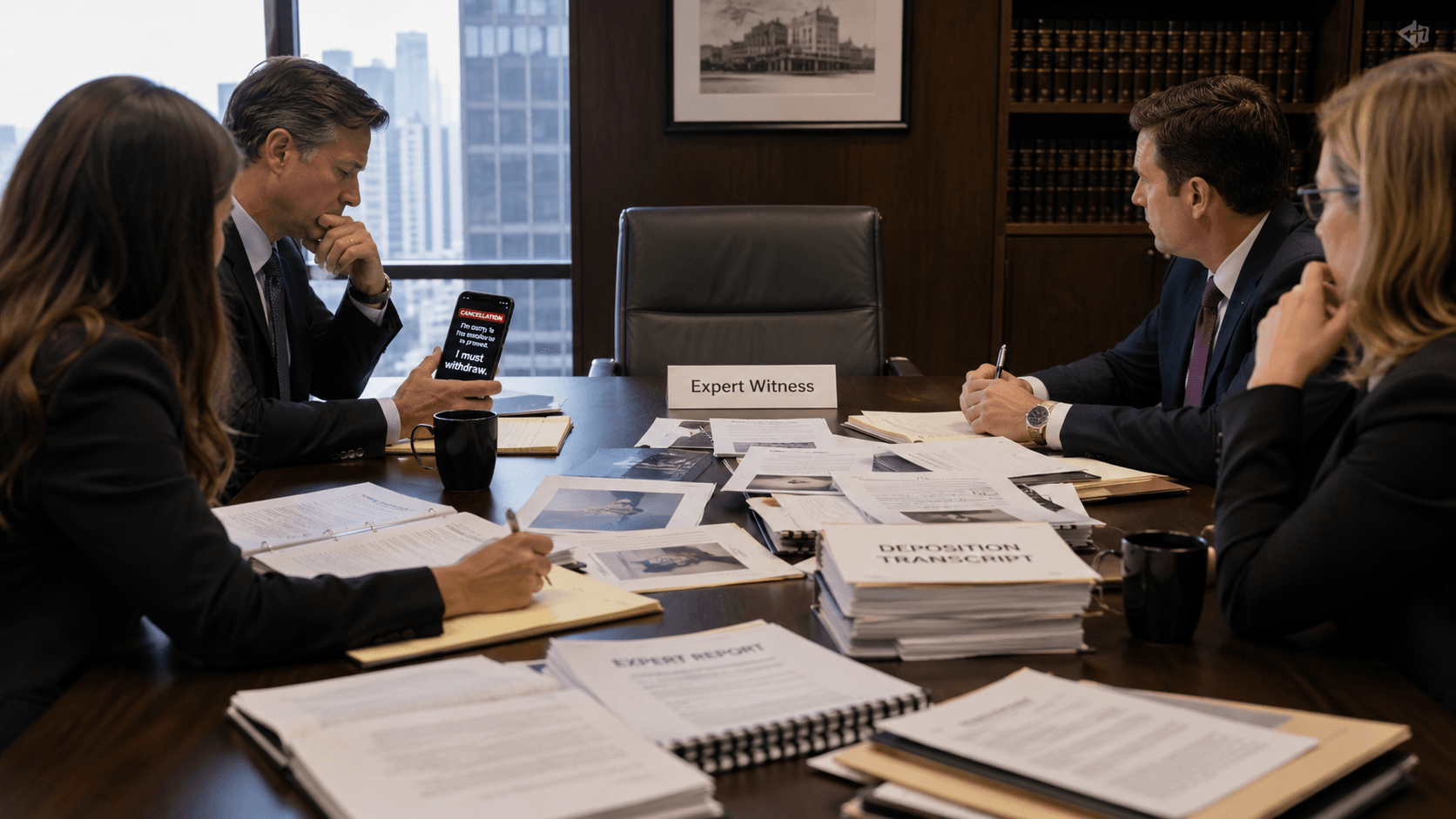
When an expert witness backs out, the problem is rarely limited to one witness. It can threaten disclosure deadlines, deposition strategy, motion practice, and, in some cases, the viability of a core liability or damages theory. The right response is not just to find another expert. It is to stabilize the case quickly, protect the record, and replace the expert in a way that does not create new problems.
Start with Triage
The first 24 to 48 hours matter.
Before reaching out to replacements, confirm the basics:
- Why did the expert withdraw?
- Was any report served, draft circulated, or opinion disclosed?
- Are expert disclosure, rebuttal, deposition, dispositive motion, or trial deadlines approaching?
- Does the expert have a file that must be preserved?
- Does the withdrawal create a gap on an essential issue such as causation, standard of care, or damages?
This early assessment shapes everything that follows. If the expert’s testimony is central to a claim or defense, delay can quickly turn into a summary judgment problem or a preventable exclusion fight.
Document the withdrawal and preserve all related communications. If there is a fee dispute, scope disagreement, conflict issue, or scheduling problem, counsel should understand it immediately before deciding whether to repair the relationship or move on.
Evaluate the Procedural Damage
A withdrawn expert creates different risks depending on timing.
If the expert exits before disclosure, the issue is mostly operational: can you retain and prepare a qualified substitute fast enough?
If the expert exits after disclosure, the issue becomes procedural and strategic:
- Do you need court permission to substitute?
- Will the scheduling order need to be modified?
- Can you show diligence and good cause?
- Will the opposing side claim prejudice?
- Are there prior opinions, materials, or disclosures that now have to be addressed?
Courts tend to focus on timing, diligence, and prejudice. If counsel moved promptly, acted transparently, and did not create avoidable delay, the request to substitute is often in a stronger posture than a last-minute scramble with no paper trail.
Protect the Prior Expert File
One of the most common mistakes is treating the withdrawn expert’s work as if it simply disappears. It does not.
The practical questions usually include:
- Whether any final report was served
- Whether draft opinions were shared beyond protected channels
- Whether the expert was designated as testifying or only consulting
- Whether the opposing side will seek the file, communications, or deposition
- Whether the replacement expert is inheriting prior analyses that could create inconsistency or impeachment issues
The answer will depend on the jurisdiction, the procedural posture, and how the expert was used. But as a general matter, counsel should assume that anything already disclosed may become part of the dispute. That is why file control, careful onboarding, and privilege discipline matter from the start.
Replace the Expert with Speed and Discipline
A rushed replacement can be worse than a withdrawn expert. The goal is not just coverage. It is a defensible witness who can survive vetting, align with the record, and work within the existing schedule.
A strong replacement process should include:
- Fast conflict screening
- Careful review of credentials, prior testimony, publications, and challenge history
- Confirmation that the expert can meet report and deposition deadlines
- A realistic discussion of scope, fees, and availability
- A clean onboarding process with organized records and a clear assignment
Just as important, the new expert should not be pressured to adopt the prior expert’s view. That creates credibility problems and invites attack. The replacement opinion has to be independently supportable.
This is where expert search becomes more than a directory exercise. In a compressed timeline, attorneys need access to qualified experts who have already been meaningfully vetted for fit, experience, and testimony risk. Expert Institute’s expert search process is built for exactly this kind of pressure, helping litigation teams identify and secure credible replacement experts without wasting critical time.
Prepare for Motions, Not Just Disclosures
In many cases, substitution requires more than serving a new report. Counsel may need to move to extend expert deadlines, reopen limited discovery, or continue trial-related dates.
The strongest requests usually show:
- The withdrawal was not strategic gamesmanship
- Counsel acted promptly after learning of the problem
- The replacement effort began immediately
- The requested extension is narrow
- Any prejudice to the opposing side can be mitigated
That record is easier to build when the response is organized from day one.
Prevent the Next Emergency
Experts usually back out for predictable reasons: unmanaged scope, poor communication, scheduling conflicts, payment issues, or discomfort with the case as it develops. Some of that is unavoidable. Much of it is not.
To reduce the risk:
- Use clear engagement terms
- Confirm deadlines and expected testimony early
- Monitor expert workload and responsiveness
- Address fee and scope issues before they escalate
- Consider backup candidates in expert-driven cases
An expert withdrawal does not have to derail the case. But it does require a disciplined response. The attorneys who handle it best move fast, protect the record, and replace the witness with the same level of rigor they would want in the first designation.