Toyota Wins Airbag Wrongful Death Appeal
Illinois appellate judges found the plaintiff lacked expert evidence tying a Camry airbag deployment to injuries that allegedly led to a driver’s death.
Published on
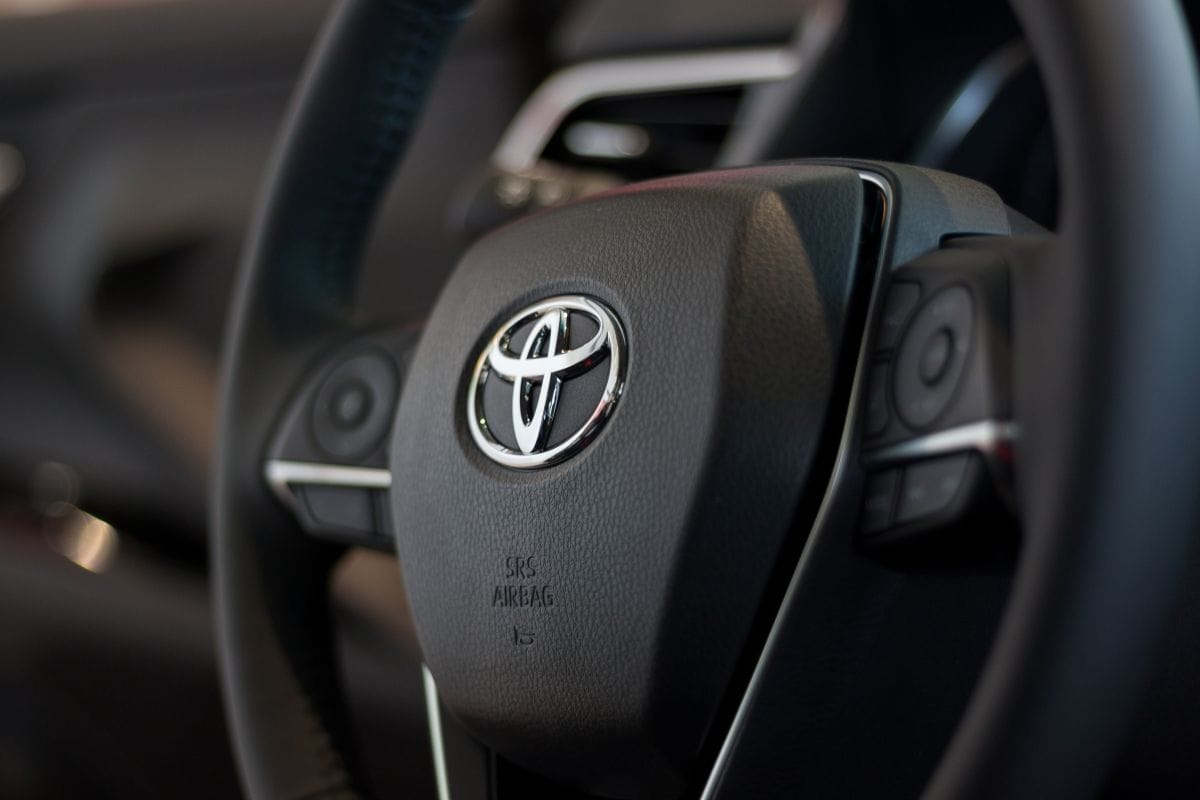
An Illinois appellate court has upheld the dismissal of a wrongful death lawsuit alleging that a defective airbag in a 2017 Toyota Camry caused injuries that ultimately led to a driver's death. The ruling reinforces the evidentiary burden placed on plaintiffs in product liability cases, particularly when key physical evidence is unavailable and expert testimony is lacking.
The First District Appellate Court unanimously affirmed a Cook County trial court’s summary judgment in favor of Toyota Motor North America Inc. and Oakbrook Toyota, the dealership that leased the vehicle involved in the incident. The panel concluded that the plaintiff failed to present sufficient evidence demonstrating that a defect in the vehicle’s airbag system caused the injuries at issue.
The dispute arose from a 2018 vehicle collision in Illinois that allegedly resulted in shrapnel-related injuries to the driver. Following the driver’s death nearly two years later, the case evolved into a wrongful death claim brought by his surviving spouse.
Collision and Injury Allegations
According to court filings, the case centered on a March 2018 crash involving a 2017 Toyota Camry driven by Vincent Headington. The lawsuit alleged that during a low-speed collision, the vehicle’s airbag system malfunctioned and caused a metal canister housing the airbags to rupture.
The complaint asserted that fragments of metal or debris were propelled into the driver’s leg and lower body during the deployment event. These injuries were described as severe and permanent, allegedly resulting in lingering medical complications.
Vincent Headington died in January 2020. His widow, Maureen Headington, later amended the lawsuit to include a wrongful death claim, contending that the injuries sustained during the crash ultimately caused his death.
The plaintiff argued that the physical damage observed inside the vehicle was inconsistent with the modest speed of the collision and therefore suggested a malfunctioning airbag system. Specifically, she proposed that either the driver-side knee airbag deployed improperly or that a bolt from the airbag assembly became dislodged and caused the injury.
Trial Court Grants Summary Judgment
The Cook County trial court dismissed the case at the summary judgment stage, concluding that the plaintiff could not establish the existence of a specific product defect.
A key factor in the court’s decision was the absence of the vehicle itself. The Camry had been leased from Oakbrook Toyota and was returned to the dealership following the crash. It was later destroyed, eliminating the opportunity for physical inspection or forensic testing of the airbag components.
Without access to the vehicle, the plaintiff relied primarily on circumstantial arguments about the crash dynamics and the alleged airbag malfunction. The court determined that such evidence was insufficient to support a product liability claim.
The trial court found that the plaintiff failed to present expert analysis demonstrating that the airbag system was defective or that the injuries were caused by a defect rather than other possible factors associated with the crash.
Appeals Court Finds Evidence Insufficient
On appeal, the First District panel concluded that the plaintiff’s theory of the case relied heavily on speculation rather than competent evidence. The judges emphasized that product liability claims require proof that a defect more likely than not caused the injury.
In its opinion, the court noted that the plaintiff presented no expert testimony addressing the speed of the collision or the functioning of the airbag system.
“Plaintiff presented no expert testimony regarding the speed of the vehicle at the time of the collision or the functionality of the airbags,” the panel stated in its order.
By contrast, Toyota presented testimony from its expert, who concluded that the vehicle’s exterior damage was inconsistent with the plaintiff’s characterization of the crash as a low-speed event. The appellate panel noted that this testimony went unrefuted.
The court also rejected the theory that a loose bolt from the airbag assembly caused the injuries, finding no evidentiary support for that claim.
Speculation Cannot Support a Jury Verdict
The appellate judges further concluded that allowing the case to proceed to trial would require jurors to speculate about the cause of the driver’s injuries.
The opinion emphasized that a plaintiff must demonstrate that the alleged defect is a probable cause of harm rather than merely a possible explanation among several alternatives.
“Plaintiff here seeks to have the jury infer that the airbags were improperly deployed and caused the cut on Vincent's leg,” the court wrote. “However, she has produced no competent evidence to support that conclusion.”
The panel also observed that other explanations for the injury could exist based on the circumstances of the collision. Without expert analysis or physical evidence tying the injury to a specific defect, the plaintiff could not meet the legal standard required to establish causation.
As a result, the appellate court affirmed the lower court’s dismissal of the case.
Implications for Product Liability Litigation
The ruling highlights the central role of expert testimony and physical evidence in automotive product liability litigation. Claims involving alleged defects in safety systems—such as airbags—often require technical analysis from engineering or accident reconstruction specialists to establish causation.
When key evidence, such as the vehicle itself, is unavailable for inspection, plaintiffs may face heightened challenges in demonstrating the presence of a defect. Courts frequently rely on expert testimony to bridge the gap between circumstantial evidence and a scientifically supported causal theory.
The decision also underscores the difficulty of proving defect claims tied to complex automotive components without detailed forensic examination. Airbag systems involve multiple sensors, deployment mechanisms, and structural elements, making expert evaluation essential when determining whether a malfunction occurred.
For litigants pursuing similar claims, the case illustrates the importance of preserving physical evidence and securing qualified expert analysis early in the litigation process.
Case Details
Case Name: Headington v. Toyota Motor North America Inc.
Court Name: Appellate Court of Illinois, First District
Case Number: 1-24-1210
Plaintiff Attorney(s): Maureen Headington (Pro Se)
Defense Attorney(s): O'Hagan Meyer LLC