Google LLC’s patent infringement suit against Sonos, Inc. reached the U.S. Court of Appeals for the Federal Circuit after the Northern District of California granted summary judgment of noninfringement. The appeal centered on claim construction for two terms that the district court found dispositive of Google’s two infringement theories under U.S. Patent No. 7,899,187, which describes domain-based digital-rights management and device enrollment for accessing protected digital content. In a nonprecedential disposition issued October 30, 2026, the Federal Circuit affirmed, concluding that the intrinsic record supported Sonos’s interpretations of both disputed terms and that the undisputed operation of Sonos’s accused products could not satisfy the asserted claim limitations under those constructions.
The Patent Claims and the Accused Sonos System
U.S. Patent No. 7,899,187 is titled Domain-Based Digital-Rights Management System with Easy and Secure Device Enrollment and describes preventing unlicensed access to proprietary digital content, such as music streamed from a licensed distributor to a licensed consumer. The patent explains a domain of devices associated with a common account that can share protected content within the domain, while devices outside the domain cannot access an unencrypted version. Within the domain, devices use a private cryptographic key to decrypt proprietary content. Google asserted independent claims 1 and 10 at trial and did not raise infringement issues unique to dependent claims.
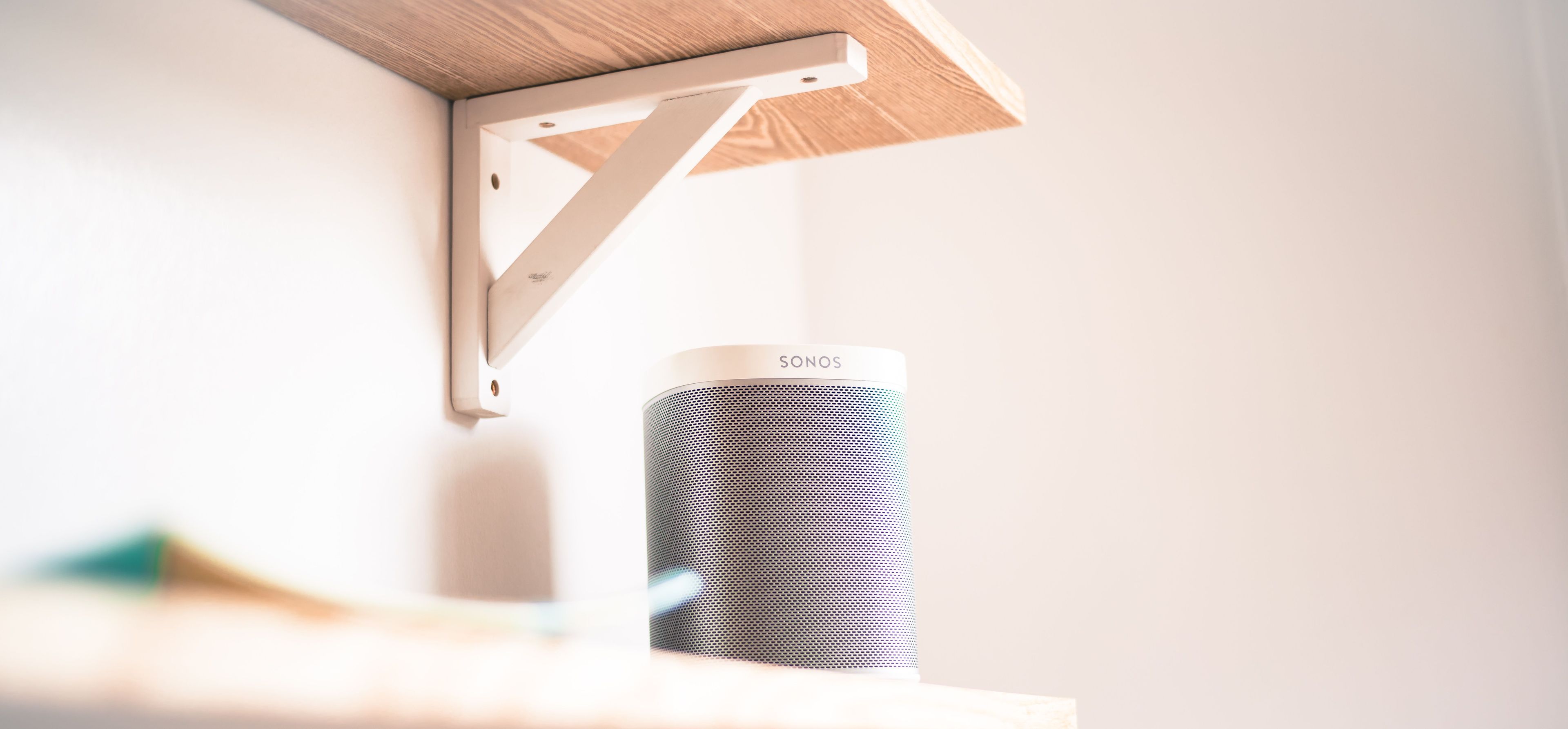
The dispute was framed against how Sonos smart speakers operate in grouped playback. Users can group multiple Sonos speakers into a household through the Sonos Controller application on a mobile device to play in sync. When players are grouped, only one player receives an encrypted music stream and uses a unique private key to decrypt the digital content before sending decrypted content to the other group members for playback. Separately, to connect a household to a streaming service, the Controller requests an authorization token from the service, receives the token, and shares it with existing players; a new player joining later can obtain the token from an existing player and authenticate to the service by presenting the token. The parties did not dispute that no Sonos player uses the authorization token as a cryptographic key input to a cryptographic algorithm.
Strong-Encryption Theory: Construction of “Utilized” and Summary Judgment
Google advanced a Strong-Encryption Theory based on claim language requiring a private key that is utilized by all devices within the domain. Under this theory, Google argued that even when only a single Sonos player runs a cryptographic algorithm with the private key to decrypt content, all devices in the household still utilized the private key because they accessed decrypted content that depended on that decryption step. Sonos maintained that the term utilized required a device to use the private key in the cryptographic operation itself, rather than merely receiving already-decrypted output forwarded from another device.
The district court agreed with Sonos and entered summary judgment, concluding that a device does not utilize a private key merely by obtaining decrypted content from another device that performed the decryption using that key as an input. On appeal, the Federal Circuit affirmed that construction. It relied on claim context requiring the new device to receive a private key and requiring that all devices utilize the private key, and it emphasized the specification’s treatment of use as decrypting by inputting the private key into a cryptographic algorithm. The court also rejected Google’s reliance on claim differentiation based on dependent claim 6, reasoning that both claim 1 and claim 6 still require the private key to be utilized by all devices and that the claims could differ in scope without expanding utilization to indirect receipt. With the parties agreeing that only one player per household directly runs the algorithm with the private key, the court held there was no genuine issue of material fact and summary judgment against the Strong-Encryption Theory was appropriate.
Authentication Theory: Construction of “Private Key” and the Token Limitation
Google’s second theory, the Authentication Theory, asserted that the authorization token used in Sonos’s streaming-service authentication satisfied the private key limitation. The district court construed private key, at summary judgment, as a non-public cryptographic key used as the key input (rather than solely as the data input) to a cryptographic algorithm. Based on the undisputed record that Sonos products never use the authorization token as a key input to a cryptographic algorithm, the district court concluded the token could not meet the private key limitation and granted summary judgment of noninfringement on this theory as well.
The Federal Circuit affirmed that construction, explaining that cryptographic algorithms commonly distinguish between a key input and a data input and that the intrinsic record grounded private key in its function as a cryptographic key controlling the algorithm’s operation. The court noted that the claims require the private key to be utilized by all devices, and its earlier construction of utilized as requiring decryption reinforced a functional distinction between the private key and the data on which it acts. The opinion cited the specification’s description of the private key as used for decrypting data or generating digital signatures, and as used to decrypt a content encryption key. While the specification also described a content encryption key encrypted with a public key so it can be decrypted using the private key, the court treated that example as consistent with the broader point that keys in the patent are described as controlling algorithmic functions. Because it was undisputed that the Sonos authorization token was never used as a key input, the Authentication Theory failed as a matter of law.
Procedural Posture, Representation, and Practical Implications
The appeal arose from the U.S. District Court for the Northern District of California, Case No. 3:20-cv-03845-EMC before Judge Edward M. Chen, and the Federal Circuit exercised jurisdiction under 28 U.S.C. § 1295(a)(1). Reviewing summary judgment de novo under Ninth Circuit law, the court applied the standard that summary judgment is appropriate where no genuine dispute of material fact exists and the movant is entitled to judgment as a matter of law, after drawing justifiable inferences for the nonmovant. The Federal Circuit also reiterated the two-step infringement framework—claim construction followed by comparison to the accused products—and that the absence of a single claim element precludes literal infringement.
Counsel listings reflected that Google, as plaintiff-appellant, was represented by Ashurst Perkins Coie US LLP and also by Quinn Emanuel Urquhart & Sullivan, LLP. Sonos, as defendant-appellee, was represented by Orrick, Herrington & Sutcliffe LLP. The panel, with Judge J. Campbell Barker sitting by designation, affirmed without reaching additional issues the district court had considered, including whether Google’s expert made a concession relevant to the Strong-Encryption Theory and whether the authorization token was based on domain information for purposes of the claims. In practical terms, the decision underscores how claim terms tied to cryptographic operations may rise or fall on the intrinsic record’s treatment of what constitutes use of a key and how a key is differentiated from other inputs within the system.