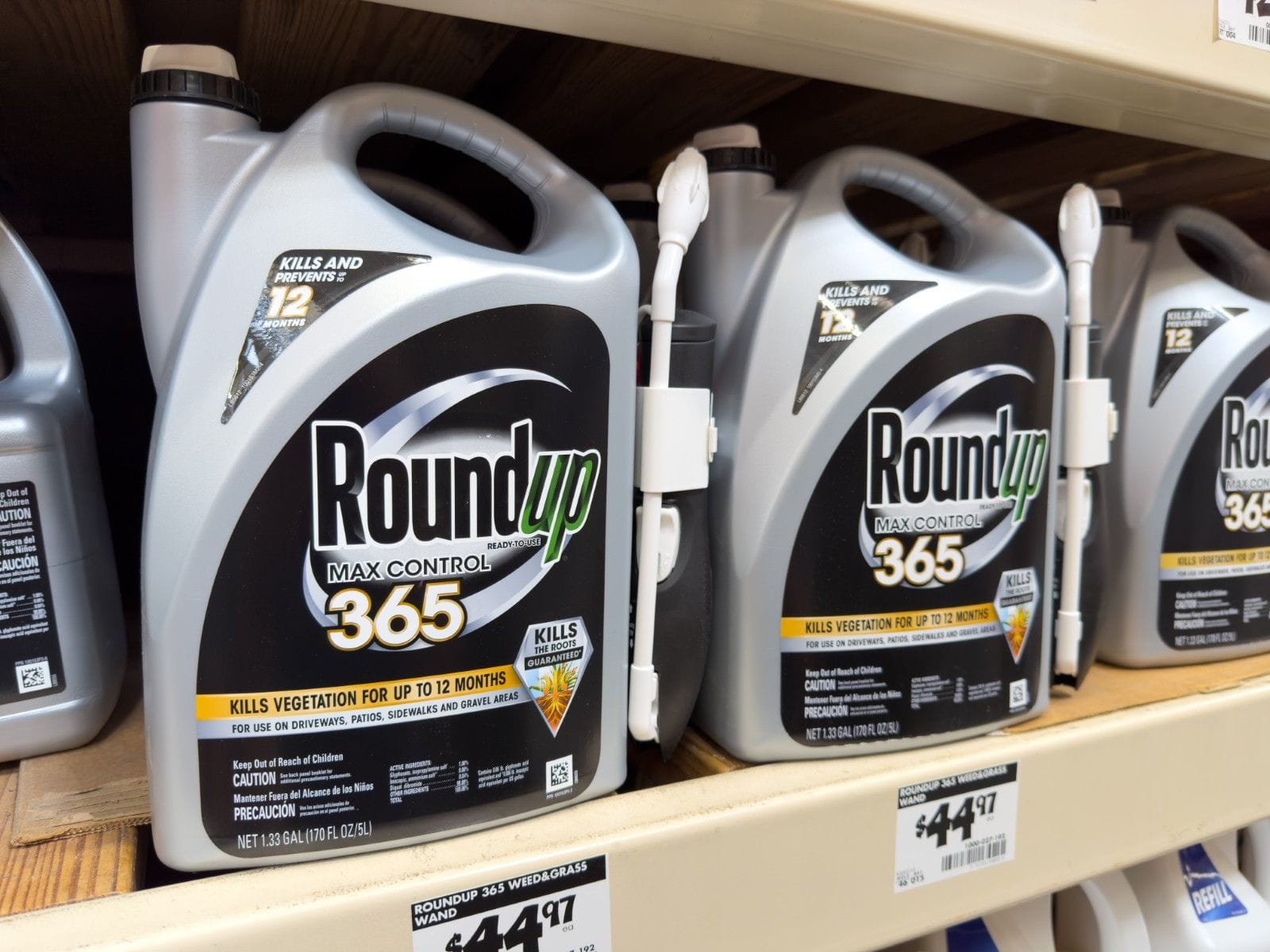
A California Court of Appeal decision has affirmed a defense verdict for Monsanto in Roundup-related cancer litigation, emphasizing the procedural requirements that govern objections to evidence and the use of limiting instructions. The Sixth Appellate District upheld a San Benito County jury’s 2023 determination that Roundup did not present known or knowable cancer risks during the relevant period and that Monsanto neither knew nor should have known the product could cause a rare form of non-Hodgkin lymphoma when used as intended. On appeal, the dispute centered on whether the trial court improperly admitted regulatory statements about glyphosate’s carcinogenicity and whether any resulting prejudice was preserved for review.
Trial Verdict and Central Liability Findings
The underlying action alleged that decades of Roundup use caused plaintiff Bruce Jones to develop a rare non-Hodgkin lymphoma. After trial, a San Benito County jury returned a verdict for Monsanto, finding the herbicide did not pose known or knowable cancer risks at the relevant times. The jury also concluded Monsanto neither knew nor should have known that Roundup could cause the disease when used as intended, foreclosing liability theories premised on knowledge, foreseeability, and product risk disclosures as framed at trial.
The appellate opinion characterized these findings as supported by the record presented to the jury and treated the verdict as a complete defense outcome on the key elements necessary to impose liability. Jones died while the appeal was pending, and the case proceeded in the name of his relative, Trevor Jones, according to the court. The appeal did not revisit the merits of the causation dispute in broad terms; instead, it focused on an evidentiary challenge to how the jury was permitted to consider certain regulatory statements about glyphosate.
Regulatory Evidence Dispute on Appeal
The appellant argued that the trial court should not have admitted statements from the U.S. Environmental Protection Agency and a foreign regulator concluding that glyphosate does not cause cancer. The thrust of the argument was that these statements were not “verifiably true” and therefore should not have been placed before the jury in a manner that could be treated as proof of non-carcinogenicity. This challenge implicated hearsay concepts and the distinction between admitting statements for their truth versus admitting them for another relevant purpose.
The Sixth Appellate District rejected the challenge, holding that the issue was not preserved in a way that would allow reversal. The panel noted that Jones conceded the statements could be admissible for nonhearsay purposes, which in turn triggered the need for a limiting instruction if the concern was that jurors might treat the statements as substantive proof. The court relied on Evidence Code section 355, explaining that a trial court’s obligation to issue a limiting instruction arises only “upon request,” and the absence of such a request meant the claim was forfeited on appeal.
Evidence Code Section 355 and Forfeiture Analysis
In affirming, the panel focused on the procedural steps required to preserve an evidentiary complaint where evidence may be admissible for a limited purpose. The court emphasized that Jones did not request a limiting instruction either in limine or when renewing objections at trial. Nor did he seek clarification from the trial judge regarding the basis for admitting the regulatory statements—whether they were being admitted for their truth or for a nonhearsay purpose such as notice, state of mind, or the reasonableness of corporate conduct at the time.
The opinion reasoned that without a request for a limiting instruction, the appellate court could not infer from the “bare fact” of an evidentiary ruling how the trial court evaluated the hearsay objection, or how it would have instructed the jury had a limiting instruction been requested. This framing effectively converted the dispute into a preservation problem rather than a substantive determination that the regulatory conclusions were correct or incorrect. Monsanto was represented in part by Bryan Cave Leighton Paisner LLP, according to the case listing, along with additional defense counsel.
Procedural Takeaways and What the Decision Signals
The decision underscores a recurring appellate principle in complex product liability trials: when evidence is arguably admissible for a limited, nonhearsay purpose, counsel typically must request an Evidence Code section 355 limiting instruction to preserve a claim that the jury could misuse the evidence as substantive proof. The panel’s analysis indicates that a general hearsay objection, without a targeted request for an instruction confining the jury’s use of the evidence, may be insufficient to obtain meaningful appellate review.
Practically, the ruling also highlights that appellate courts may be reluctant to reverse where the record does not show that the trial judge was asked to decide the precise question presented on appeal—namely, whether the statements were admitted for their truth and, if so, whether that admission was improper. The case remains captioned Jones v. Monsanto Co., No. H052310, in the California Court of Appeal, Sixth Appellate District, and the affirmed verdict leaves the 2023 jury findings intact, including the conclusion that Roundup did not present known or knowable cancer risks during the relevant period.