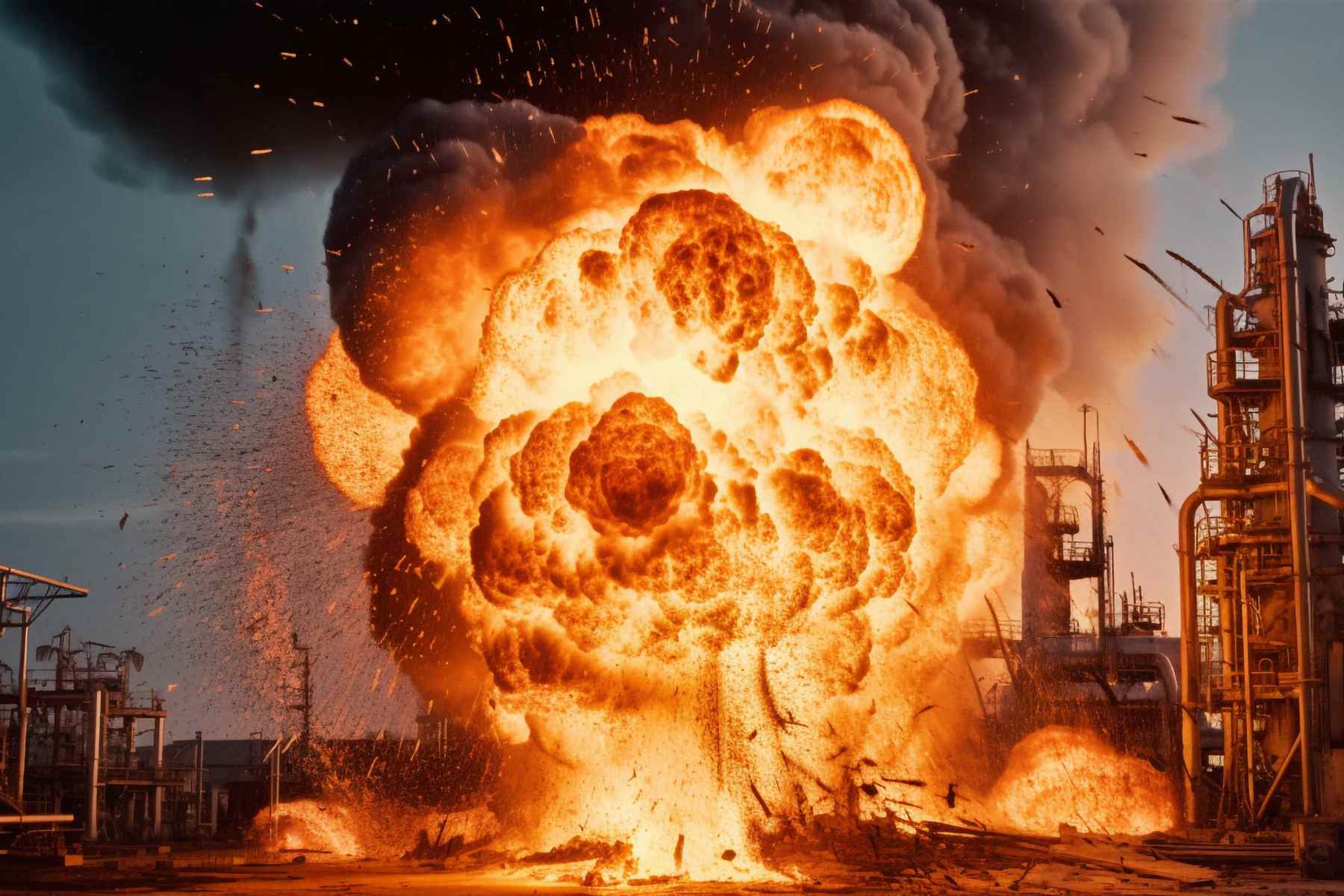
A Starr County, Texas, jury returned a unanimous verdict awarding more than $1.6 billion to the families of two workers killed in a 2023 explosion at a hazardous-chemicals facility in Pecos, underscoring the high financial exposure that can follow alleged process-safety failures in the oil-and-gas services supply chain. The decedents, Reinaldo Garcia Peña, 57, and Angel Alaffa, 30, were performing welding work at the Pecos Liquids Handling Facility when a tank battery exploded on October 7, 2023. After a two-week trial, jurors attributed full responsibility to the facility’s owner, Upton Assets LLC, and issued a damages package combining substantial compensatory awards with significant punitive components.
Incident Background and Safety Framework
Court filings and trial evidence described the Pecos Liquids Handling Facility as receiving, storing, processing, and transferring highly flammable natural gas liquids and condensate from oil and gas operations in the Permian Basin and Reeves County. The facility was characterized as operating under the federal Process Safety Management (PSM) framework, which generally requires written procedures, training, documentation, hot work permitting, and contractor oversight when “highly hazardous” materials are present. The plaintiffs’ case centered on the contention that the site did not implement those measures before the incident, despite the nature of the materials and the work being performed.
According to the lawsuit’s description of the incident, the explosion occurred as Alaffa attempted to begin welding on a silo that had not been properly emptied of flammable chemicals, even though workers were allegedly assured it was safe. The plaintiffs also pointed to a reported liquid-hydrocarbon spill in a containment area days earlier and to allegations that conditions had been “falsely assured” as safe for hot work. Additional trial themes included claimed deficiencies in worker onboarding and hazard communication, including assertions that the men received no safety training or manuals and were provided a gas monitor that could not detect the specific vapors alleged to have ignited.
The Trial Record and Negligence Findings
The case proceeded to verdict in the courtroom of Judge Jose Luis Garza, with a 12-member jury completing a 16-question verdict form late Friday following a two-week trial. Jurors found Upton Assets LLC negligent and assigned it 100% responsibility for the injuries resulting from the explosion. The verdict further reflected the plaintiffs’ theory that the fatal event was not an unavoidable accident but the product of preventable safety failures, with a focus on training, permitting, and oversight practices associated with welding on equipment alleged to contain residual flammable materials.
Evidence described in post-trial accounts included testimony from Upton Assets’ owner, Thomas Oliver Hanks Jr., who admitted under oath that he had “had never read” the safety manuals that the facility should have been following. The plaintiffs also argued that managers and workers lacked training on proper safety protocols, and that the on-site facility manager lacked PSM training and relevant qualifications. The families were represented by The Ammons Law Firm, according to court filings and statements summarizing the trial record.
Damages Award, Allocation, and Bankruptcy Context
The verdict exceeded $1.6 billion in combined damages for both families, reflecting both compensatory and punitive awards. For the Garcia Peña family, the jury awarded $203 million in compensatory damages, including $101.5 million to his widow and $50.75 million to each of two daughters, plus $609 million in punitive damages apportioned among the widow and daughters. Separate published accounts described the Garcia Peña family’s total as $812 million, consistent with the combined compensatory and punitive figures reported in the verdict summaries.
For the Alaffa family, verdict summaries reported more than $200 million in compensatory damages allocated among his widow, minor daughter, and parents, along with $609 million in punitive damages apportioned equally between the widow and minor daughter. The timing of the award followed a significant procedural development: Upton Assets LLC filed for Chapter 11 bankruptcy protection on April 6, roughly two weeks before the jury reached its verdict. That filing may shape collection mechanics and the path of any post-judgment proceedings, including the treatment of claims within the bankruptcy process.
Post-Verdict Posture and Broader Implications
The case caption was identified as *Elizabeth Garcia, et al., Estate of Angel Alaffa v. Axis Transport, LLC, Upton Assets, LLC, Salazar Service & Trucking Corp., and Thomas O. Hanks*, DC-23-465. The pleadings named multiple defendants alongside Upton Assets, though the jury’s responsibility findings described in verdict accounts placed full fault on Upton Assets for the explosion’s resulting injuries. Defense counsel were identified in case summaries, and no immediate comment was reported from the defense team in the wake of the verdict.
Going forward, anticipated litigation activity may include post-trial motions, challenges to punitive and compensatory components, and appellate review of evidentiary and charge issues, alongside bankruptcy-related questions about enforceability and payment priority. More broadly, the verdict highlights how alleged departures from PSM-aligned practices—particularly around hot work controls, training documentation, and contractor oversight—can drive catastrophic-loss exposure and punitive-damages risk when jurors conclude safety requirements were knowingly disregarded.