Novo Nordisk Sues Hims & Hers Health, Inc. Over Wegovy Copies
A new patent challenge tests the boundary between compounding and branded GLP-1 exclusivity as supply status and enforcement priorities shift
Published on
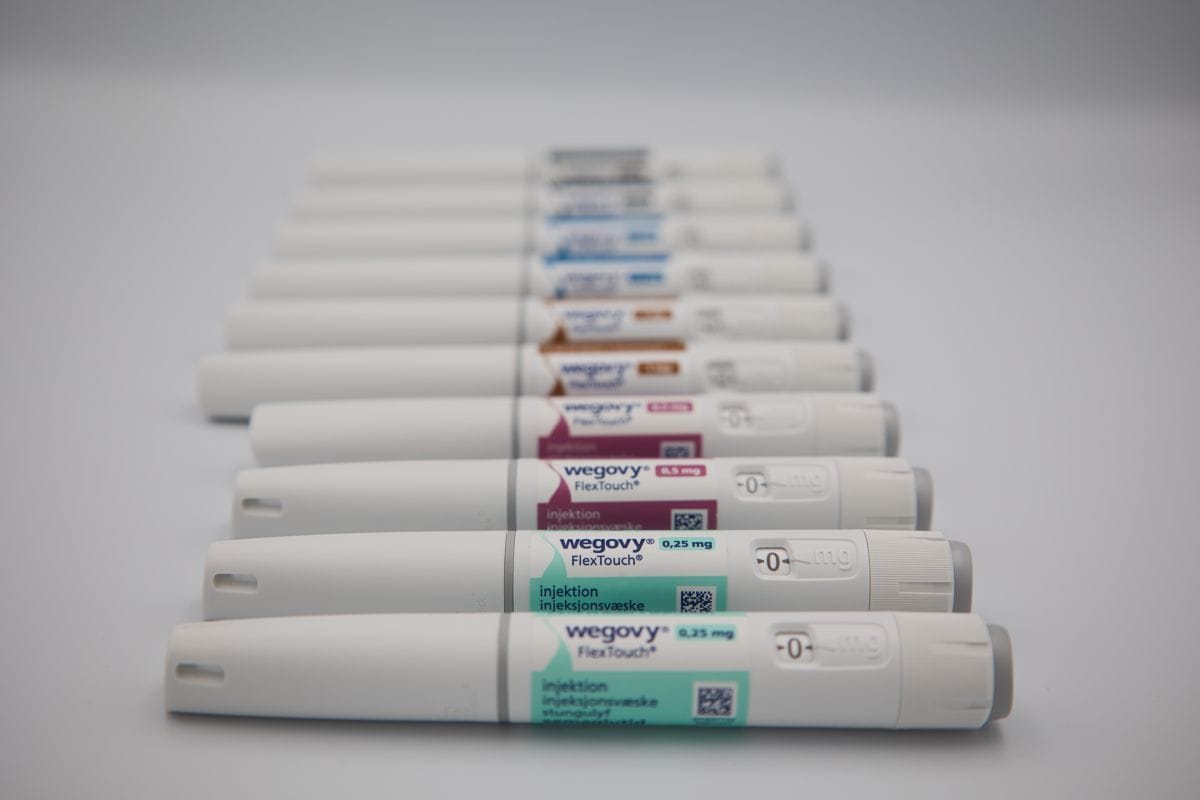
Novo Nordisk has filed a patent infringement action in the U.S. District Court for the District of Delaware against Hims & Hers Health Inc. and its subsidiary Hims Inc., alleging the telehealth company’s compounded semaglutide offerings infringe a core composition patent covering semaglutide, the active ingredient in Wegovy, Ozempic, and related products.
The filing marks a shift in how brand manufacturers are seeking to police the expanding market for compounded glucagon-like peptide-1 (GLP-1) therapies. Prior enforcement efforts across the GLP-1 category have often emphasized product safety, marketing claims, or trademark-related theories. A patent case, by contrast, centers on whether the accused products contain a molecule that falls within the scope of a valid and enforceable patent claim, and it can expand potential remedies to include lost profits, reasonable royalties, and, in some circumstances, enhanced damages.
At a practical level, the dispute arrives at a time when large consumer health platforms have moved beyond small-batch, patient-specific compounding models and into scaled, subscription-style weight management programs. That scale can make compounding activity look less like individualized pharmacy practice and more like a market substitute for FDA-approved products, a distinction that often matters both legally and factually.
The Complaint’s Core Theory: A Composition Patent for Semaglutide
Novo Nordisk’s complaint focuses on U.S. Patent No. 8,129,343, which the company alleges protects semaglutide itself and pharmaceutical products containing it. The complaint frames the patent as the product of decades of GLP-1 research and substantial investment, emphasizing that FDA-approved semaglutide medicines reached the market only after clinical testing and regulatory review designed to establish safety, efficacy, and quality.
The pleaded infringement theory is straightforward: Hims allegedly markets compounded products described as GLP-1 therapies that contain semaglutide, and semaglutide is alleged to fall within the asserted claims of the ’343 patent. The complaint describes these compounded offerings as unapproved and not evaluated by the FDA, while also alleging Hims represents to consumers that the compounded products use the same active ingredient as brand-name Wegovy and Ozempic.
The lawsuit also reflects a common feature of pharmaceutical patent disputes: the plaintiff’s effort to anchor the patent’s regulatory footprint. Novo Nordisk alleges the ’343 patent is listed in the FDA’s Orange Book for Ozempic, Wegovy, and Rybelsus, and it contrasts the Orange Book pathway used by companies seeking to launch approved generics with what it characterizes as Hims’ attempt to bypass the FDA approval framework through compounding.
In describing its approved portfolio, the complaint details multiple dosage forms and indications tied to semaglutide products, including weekly injectable pens and oral formulations. These allegations are not merely background. They support two recurring themes in patent cases involving medicines: (1) the scientific and regulatory investment that underlies exclusivity, and (2) the public health rationale for insisting that large-scale distribution of a drug product occur through FDA-approved channels rather than via unapproved compounded substitutes.
Supply Status, FDA Enforcement, and the Compounding Exception
A central backdrop to the dispute is the relationship between compounding and drug shortage policy. Federal law and FDA guidance permit certain compounding when a commercially available drug is in shortage or when a prescriber determines a patient requires a customized formulation that is not otherwise available. The boundaries of that exception have become increasingly contested as demand for GLP-1 therapies surged.
The complaint and surrounding public statements situate the dispute after the FDA determined that semaglutide is no longer in shortage, a development that can alter the legal and factual posture of compounding programs. When an active ingredient is listed as available, broader compounding activity may face increased scrutiny, particularly if the compounded product appears to replicate an approved drug without meaningful patient-specific customization.
The case also follows a brief, high-profile marketing effort by Hims involving a low-cost compounded version of Wegovy and a subsequent pullback after federal regulators signaled enforcement attention. In a statement responding to the lawsuit, Hims characterized the action as broader than a single product line, stating the lawsuit “attacks more than just one medication or company – it directly assaults a well-established, vital component of US pharmacy practice.”
Those competing narratives highlight the likely policy tension in the litigation. Novo Nordisk will likely argue that scaled compounding of semaglutide functions as a substitute for patented, FDA-approved products and undermines both intellectual property rights and regulatory safeguards. Hims, in turn, is positioned to argue that compounding remains a lawful part of pharmacy practice when tied to individualized prescribing and that access and affordability concerns support continued availability of certain compounded regimens, particularly where branded dosing options do not match patient needs.
High-Stakes Patent Issues: Validity, Proof, and Remedies
Patent litigation raises distinct burdens compared with trademark or advertising disputes. Novo Nordisk must prove infringement of at least one asserted claim, which in a composition-of-matter case can turn heavily on chemical identity and analytical testing. If Hims disputes that its compounded products contain semaglutide as claimed, the case may require expert-driven evidence regarding the active pharmaceutical ingredient’s structure, source, and equivalence to the patented molecule.
Hims is also likely to challenge the patent’s validity, a standard defense strategy where the accused activity relates to a high-revenue drug. Any invalidity defense would need to grapple with prior scrutiny of the patent. Novo Nordisk has pointed to the U.S. Patent and Trademark Office’s rejection of a separate validity challenge to the same patent brought by a generic drugmaker in 2023, a fact that may inform how the parties frame the likelihood of success at early stages.
Remedies may shape the litigation strategy on both sides. Novo Nordisk has not publicly quantified its damages demand in the complaint excerpt provided, but the company has indicated it views the exposure as substantial. According to the company’s general counsel, the damages sought are “a very significant amount.” Beyond money damages, Novo Nordisk may pursue injunctive relief to halt sales of compounded semaglutide products, though preliminary injunctions in patent cases require a strong showing on likelihood of success and irreparable harm and can be difficult to obtain.
The complaint’s structure also signals potential willfulness and indirect infringement theories. Allegations that a defendant continued commercial activity with knowledge of a patent, or provided instructions that encourage infringing use, can increase settlement pressure and raise the stakes through enhanced damages and attorney-fee arguments if the plaintiff ultimately prevails.
Implications for Telehealth Platforms and Compounding Pharmacies
This case is likely to be watched closely by telehealth platforms that have entered weight management and metabolic care at scale, as well as by pharmacies that support compounded GLP-1 programs. The dispute tests how courts may view mass-market marketing of compounded versions of patented medicines when the shortage rationale is no longer available and when the product’s labeling acknowledges it is not FDA approved.
More broadly, the litigation may contribute to a clearer judicial record around three issues that recur in GLP-1 compounding disputes: how to distinguish individualized compounding from de facto manufacturing, how patent exclusivity interacts with compounding exceptions, and what evidentiary showings are required to prove that a compounded product contains a patented active ingredient.
If Novo Nordisk succeeds, the outcome could accelerate additional patent actions targeting larger platforms and suppliers rather than only smaller actors, and it could narrow the practical space for widespread compounded semaglutide distribution. If Hims succeeds—whether through noninfringement, invalidity, or limitations on remedies—the result could embolden continued compounding models and prompt further regulatory attention to define and enforce the line between customization and substitution.
Case Details
Case Name: Novo Nordisk A/S et al. v. Hims & Hers Health, Inc. et al.
Court Name: U.S. District Court for the District of Delaware
Case Number: 1:26-cv-00143
Plaintiff Attorney(s): Morris Nichols Arsht & Tunnell LLP