Cocona Inc.’s effort to enforce U.S. Patent No. 8,945,287, directed to an active particle-enhanced waterproof and breathable membrane, ended at the Federal Circuit on November 17, 2026. In consolidated appeals from the District of Colorado, Cocona challenged a final judgment holding asserted claims 1, 38, and 39 invalid for indefiniteness under 35 U.S.C. § 112. The dispute centered on a moisture vapor transmission rate (MVTR) limitation requiring a membrane MVTR from about 600 g/m²/day to about 11,000 g/m²/day. The appellate court affirmed, concluding the patent did not provide sufficient guidance on how to measure MVTR where multiple measurement methods and variable conditions could yield materially different results.
MVTR as a Claim Boundary and the Measurement Problem
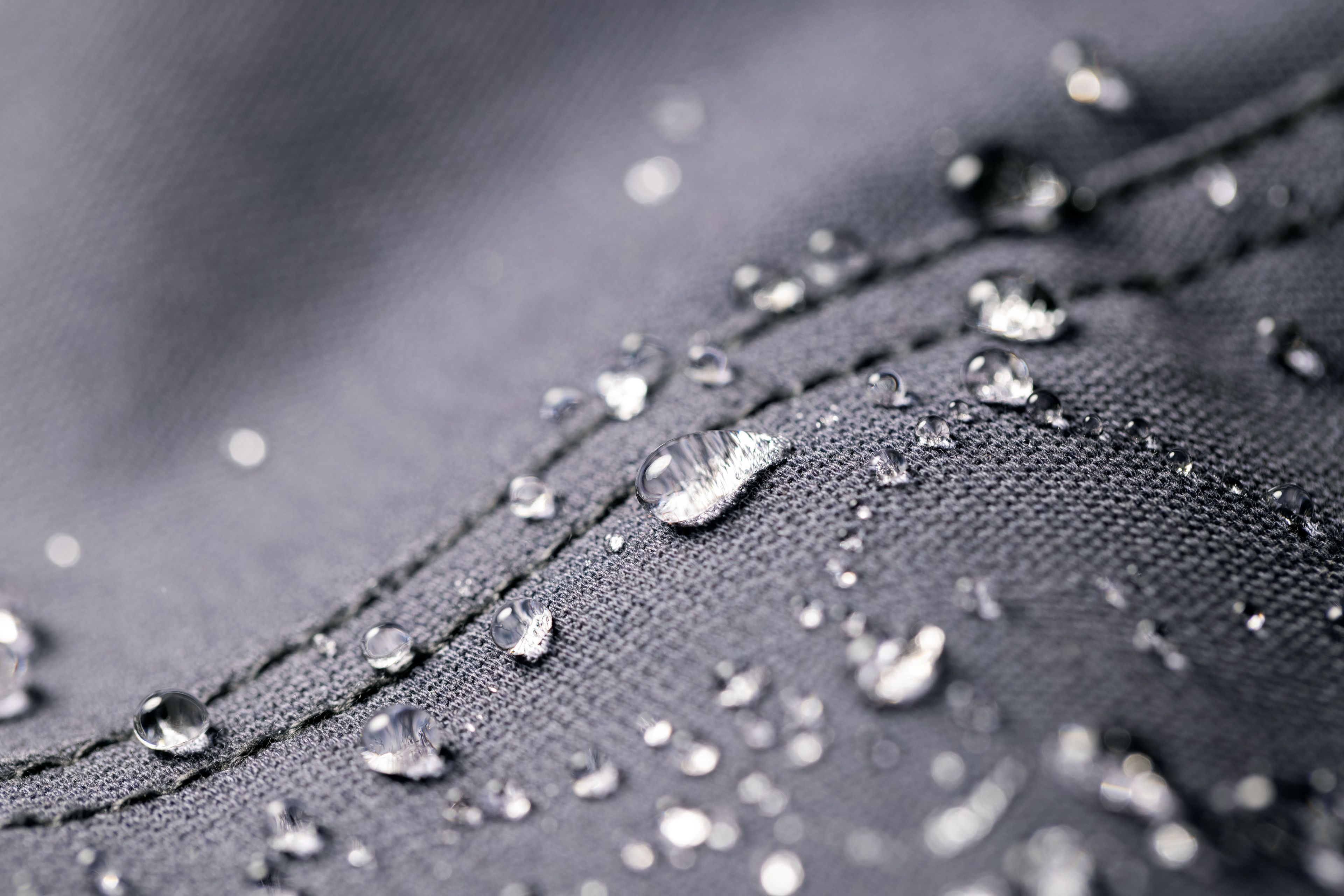
Cocona asserted claims that each included a substantively identical MVTR range limitation. MVTR, described as the rate at which moisture permeates a material and generally reported in g/m²/day, was treated as a key performance measure for the claimed membrane. The patent explained that active particles, such as activated carbon, were used in a membrane to improve vapor transfer while repelling liquid water and potentially providing other properties such as odor absorption. Although the claims demanded the MVTR fall within a defined numeric range, they did not specify which test method must be used or which environmental conditions should apply when determining whether a product satisfies the limitation.
The specification identified three potential methods for measuring MVTR: the Mocon method, the upright cup method, and the inverted cup method. It linked the upright method to low moisture contact and the inverted method to high moisture contact, but it did not explain how to distinguish between low and high moisture contact. In the patent’s single specific embodiment, the disclosure stated MVTR may be measured using upright or inverted cup testing at 40°C and 20% relative humidity over a 24-hour period, with testing accomplished according to the ASTM E96-94 Water method. However, the ASTM E96-94 standard itself allowed variability in test conditions, including temperature ranges and relative humidity options that depend on intended application, and it cautioned that MVTR values can differ across test conditions.
District Court Claim Construction and Indefiniteness Ruling
During claim construction, Cocona proposed to construe the MVTR limitation by incorporating the ASTM E96 MVTR cup water test method, fixing temperature and humidity at 40°C and 20% relative humidity over 24 hours, and tying upright testing to low moisture contact and inverted testing to high moisture contact. The district court rejected that approach and instead concluded the asserted claims were invalid as indefinite based on the MVTR limitation. Final judgment was entered for VF Outdoor LLC, doing business as The North Face, and for Columbia Sportswear Company, and Cocona appealed.
On appeal, the Federal Circuit treated indefiniteness as a question of law reviewed de novo, with factual findings about extrinsic evidence reviewed for clear error, and it reiterated that any fact critical to a finding of indefiniteness must be proven by clear and convincing evidence. The court concluded that, read in light of the specification and incorporated material, the patent lacked required guidance on how MVTR should be measured for purposes of determining claim scope. The panel emphasized that the claim language set only a numeric MVTR range and provided no information regarding choice among the upright or inverted cup methods, whether to apply both, or what temperature and humidity conditions should govern testing.
Federal Circuit Affirmance, Including Intrinsic and Extrinsic Evidence
The Federal Circuit found the intrinsic record reinforced uncertainty rather than resolving it. In addition to identifying multiple MVTR methods without directing which to use, the patent’s disclosure of 40°C and 20% relative humidity was framed as permissive, using language indicating those conditions may be used, rather than mandatory. The appellate court also considered MVTR data discussed in the patent and in a provisional application incorporated by reference. In that incorporated provisional, a version of the MVTR table reported a tested sample containing activated carbon where the inverted cup method yielded a value within the claimed MVTR range while the upright cup method yielded a value outside it. In the panel’s view, this illustrated that the choice of method could determine whether a material meets the MVTR limitation, and the patent did not provide sufficient direction to eliminate that ambiguity.
The extrinsic record, as credited by the district court, supported the same conclusion. The district court evaluated competing expert declarations and was persuaded by the declaration of Dr. Abigail Oelker, offered by the defendants, that the patent provided inadequate guidance on which method and what temperature and humidity conditions to use when measuring MVTR. Cocona’s expert, Dr. Stephen McCarthy, was not credited because his testimony was characterized by the court as conclusory and lacking an explanation for how a skilled artisan would infer specific testing requirements from the patent’s permissive language. The Federal Circuit found no clear error in those factual findings and held they bolstered the legal conclusion of indefiniteness. Columbia was represented on appeal by Sheridan Ross PC and Stoll, Stoll, Berne, Lokting & Shlachter, P.C., while VF Outdoor and Columbia were also represented by Merchant & Gould PC.
Practical Takeaways for Drafting Performance-Metric Limitations
The decision underscores the risk of using numeric performance ranges as claim boundaries without specifying a measurement protocol that yields reasonably certain, reproducible results. Here, the asserted MVTR limitation was central to defining whether the membrane fell within the claimed scope, yet the patent did not identify a single controlling method or provide criteria for selecting among multiple disclosed approaches. The presence of testing standards such as ASTM E96-94 did not cure the problem where the standard itself permitted variable conditions, and the patent did not convert optional example conditions into a requirement.
The Federal Circuit also rejected arguments that differences in test outcomes were irrelevant simply because certain samples did not practice all claim limitations, reasoning that measurement ambiguity remained pertinent when it could affect whether an item meets a disputed limitation. For patent litigators, the case illustrates how indefiniteness challenges can turn on the interaction between claim language, permissive specification disclosures, incorporated-by-reference material, and evidence showing that method selection can change infringement outcomes. Beyond this dispute, the ruling provides a concise reminder that patents relying on metrics like MVTR must clearly anchor the metric to a defined method and conditions if it is to function as an enforceable claim boundary.