Missouri jurors returned a defense verdict for Monsanto in a Roundup lymphoma trial involving three plaintiffs who alleged injury after regular use of the herbicide, marking the first such trial to proceed after the U.S. Supreme Court’s June decision in Monsanto Co. v. Durnell. During closing arguments, the plaintiffs sought damages in the range of $10 million to $30 million per plaintiff, contending the evidence supported causation and significant ongoing harms. The jury deliberated for less than two hours before finding for Monsanto as to Theresa Aretino, Cynthia Fernandez, and Betty Larkin. The proceeding focused less on labeling issues and more on competing interpretations of the scientific and regulatory record regarding glyphosate.
Trial Context After Monsanto Co. v. Durnell
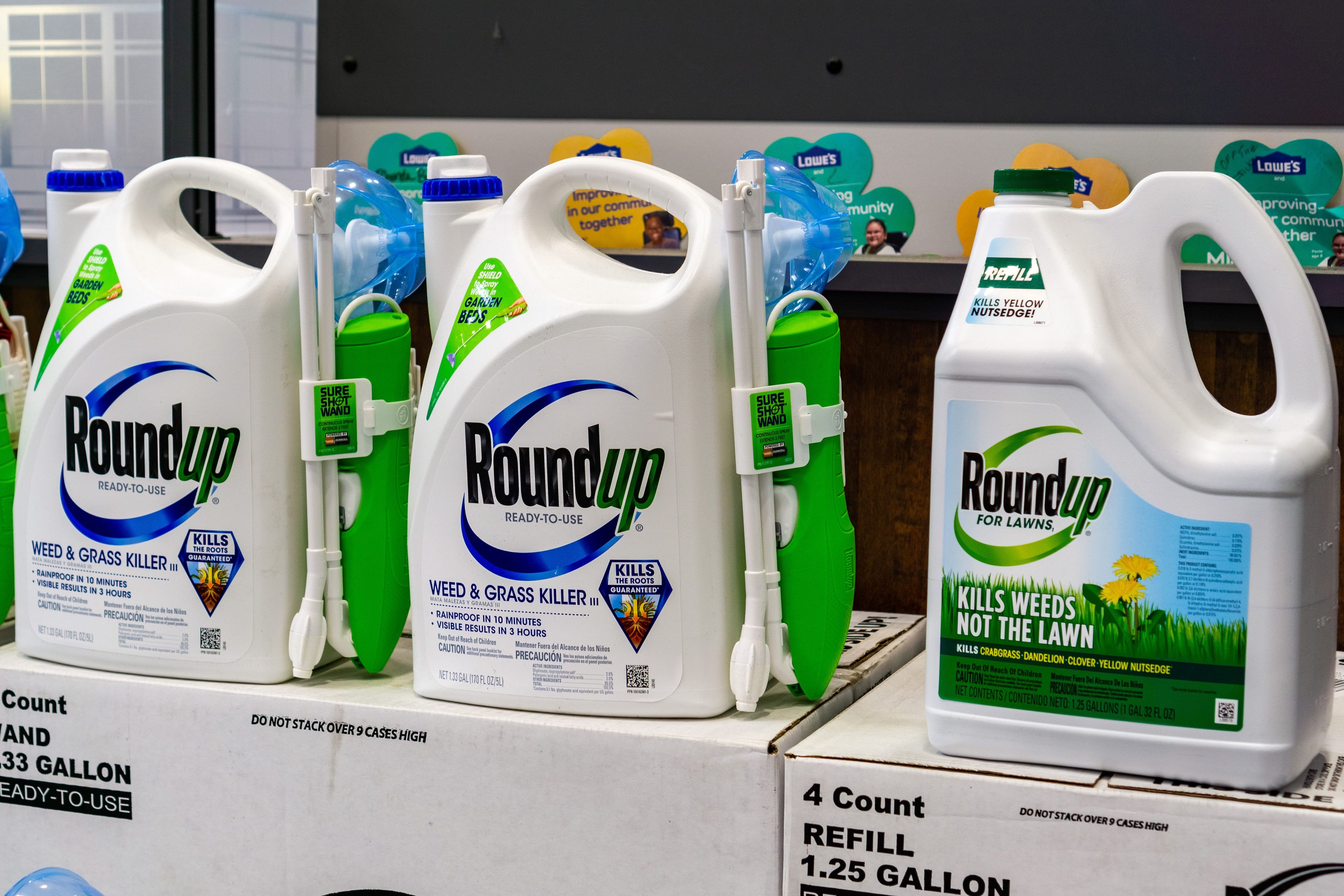
The trial occurred against the backdrop of the Supreme Court’s June ruling in Monsanto Co. v. Durnell, which overturned a prior verdict against Bayer AG-owned Monsanto. The decision held that the Federal Insecticide, Fungicide and Rodenticide Act preempts a label-based failure-to-warn claim when the U.S. Environmental Protection Agency has not required the warning at issue. In this case, there was little discussion of Roundup’s product label, and the presentation instead centered on the strength and interpretation of scientific evidence concerning glyphosate, Roundup’s active ingredient.
Jurors heard extensive testimony about published research on glyphosate and how regulators have evaluated that body of work, with particular attention to the positions of the EPA and the International Agency for Research on Cancer. Plaintiffs contended Monsanto declined to conduct research they characterized as necessary, and argued the company improperly influenced the scientific record by ghostwriting and funding research. Monsanto disputed those accusations and emphasized the role of regulatory review in evaluating carcinogenic potential, positioning the dispute as one grounded in scientific assessment rather than labeling adequacy.
Evidence Presented on Exposure and Lymphoma Diagnoses
The three plaintiffs, Theresa Aretino, Cynthia Fernandez, and Betty Larkin, each alleged that regular Roundup use was associated with later lymphoma diagnoses. Fernandez testified about extensive gardening around her Florida home, describing repeated use of sprayers and contact with sprayed material during hourslong sessions. She and her husband have lived on the property since 1986, and she described instances in which wind caused spray to blow back onto her. The evidence also included estimated hours of Roundup exposure attributed to each plaintiff: 621 hours for Aretino, 254 hours for Fernandez, and 46 hours for Larkin.
An oncologist and hematologist, Jack Goldberg, provided testimony linking Roundup exposure to the plaintiffs’ conditions and addressed their medical histories. He testified that Fernandez was diagnosed in 2008 with Waldenström’s lymphoma, did well after treatment for a long period, experienced a recurrence in 2023, and was in disease stabilization at the time of trial. Goldberg testified that Aretino was diagnosed in 2016 with diffuse large B-cell lymphoma, entered remission, and had a recurrence in 2021, and he stated he did not identify significant risk factors in her history apart from Roundup. With respect to Larkin, who was diagnosed in 2009 at age 71, Goldberg testified that her light smoking history was not significant for the types of lymphoma involved, that she was medically observed until 2021 when she developed a second lymphoma and began treatment, and that she has since died.
Closing Arguments, Regulatory Record, and the Defense Verdict
In closing arguments, plaintiffs’ counsel Gregory Dovel of Dovel & Luner asked jurors to focus on the plaintiffs’ long-term experience following their diagnoses and sought damages framed as compensation commensurate with the risk and burdens of what they endured. The plaintiffs’ request, as presented to jurors, was an award between $10 million and $30 million for each of the three plaintiffs. The argument emphasized the claimed persistence of health effects for the surviving plaintiffs, including cognitive impairment, physical pain, immobility, fatigue, and reduced energy.
Monsanto’s defense team, represented by Paul Boehm, Michelle Ramirez and Morgan Branch of Sidley Austin LLP and Erik Hansell of Husch Blackwell LLP, countered that glyphosate has been extensively studied and is widely considered safe outside the courtroom. BCLP also reported that its team, led by partner Justin Benson and supported by Slade Mendenhall and Alexa Thein, assisted Monsanto before and during trial. In addition to disputing allegations that Monsanto influenced the EPA, the defense highlighted the agency’s long-running assessments, including that the EPA registered glyphosate in 1974 and reregistered it in 1993. The defense also pointed to the EPA’s December 2017 report, Revised Glyphosate Issue Paper: Evaluation of Carcinogenic Potential, which found that the overall weight of scientific evidence did not support linking glyphosate to human cancer, and contrasted that with the International Agency for Research on Cancer’s 2015 classification of glyphosate as a probable human carcinogen. After deliberating for less than two hours, the jury found for Monsanto on the claims of Aretino, Fernandez, and Larkin.
Case Identification and Procedural Posture
The matter is captioned Aretino et al. v. Bayer et al., case number 20SL-CC03676, in the 21st Judicial Circuit of Missouri, St. Louis County. The verdict resolved the claims presented at this trial in Monsanto’s favor as to all three plaintiffs. The case is notable as the first Roundup trial to reach a jury after the Supreme Court’s June decision in Monsanto Co. v. Durnell, a ruling that narrowed the viability of label-based failure-to-warn theories when the EPA has not required the warning.
The parties’ trial presentations reflected that shift, with limited attention to label issues and a substantial focus on scientific evidence and regulatory evaluations, including the EPA’s risk assessment history and the IARC’s contrary carcinogenicity determination. Monsanto’s defense team included Paul Boehm, Michelle Ramirez, and Morgan Branch of Sidley Austin LLP, as well as Erik Hansell of Husch Blackwell LLP. BCLP also reported that its team, led by partner Justin Benson and supported by Slade Mendenhall and Alexa Thein, assisted Monsanto before and during trial. The plaintiffs were represented by Gregory Dovel of Dovel & Luner.