Texas Judge Recommends Summary Judgment in Pay Patent Suits
A magistrate judge recommended summary judgment for Macy’s, Petco, and Starbucks, finding Pay platform sublicenses impliedly licensed the retailers.
Published on
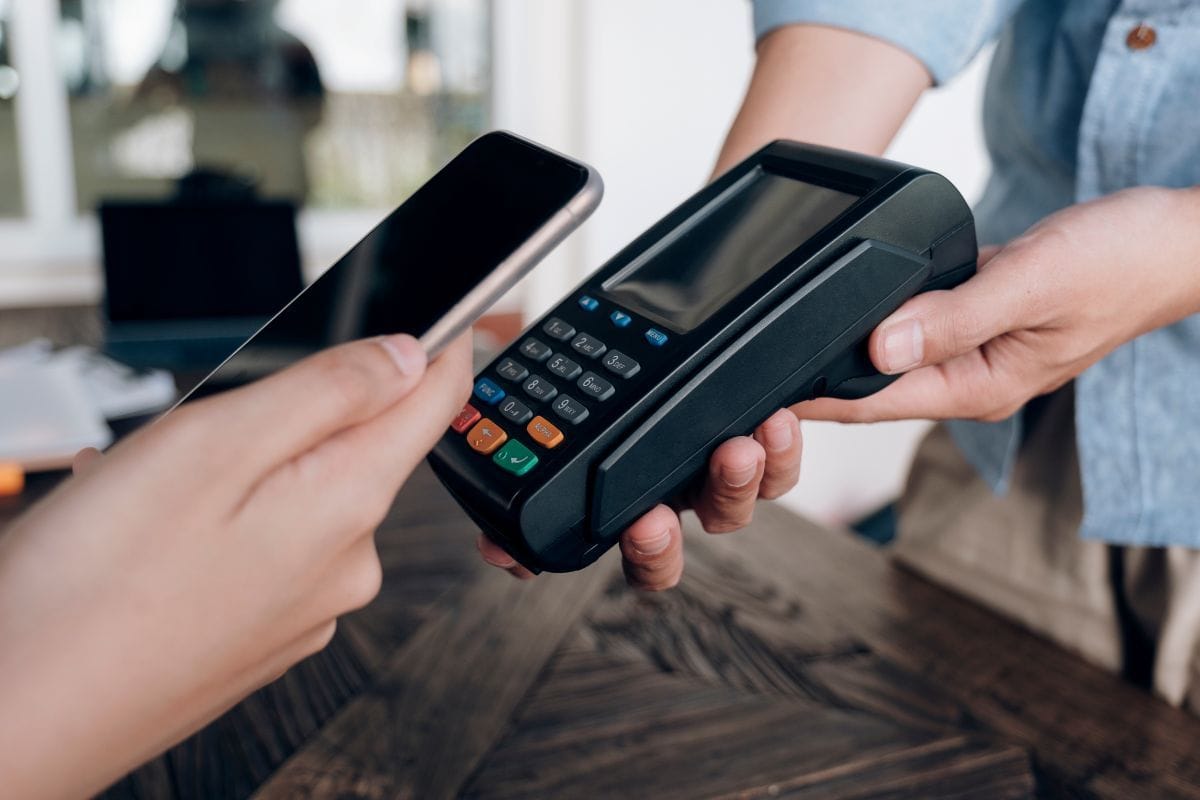
Retailers facing patent infringement claims tied to mobile wallet transactions may be nearing a decisive procedural win in the Western District of Texas. Three related suits accuse Macy’s, Petco, and Starbucks of infringing payment-processing patents through their acceptance of Apple Pay, Google Pay, and Samsung Pay. A U.S. magistrate judge has recommended summary judgment for the retailers, concluding that sublicenses granted to the technology companies extend implied licenses to their customers. If adopted, the recommendation would narrow a common litigation theory aimed at end users of licensed payment platforms and clarify how sublicensing language operates in high-volume consumer ecosystems.
The Patent Claims and the Retailers’ Accused Conduct
Monticello Enterprises LLC, an entity owned by inventor Thomas Isaacson, asserted four patents—U.S. Patent Nos. 10,643,266; 11,004,139; 11,461,828; and 11,468,497—against Macy’s, Petco, and Starbucks. The complaints, filed in November 2023, focused on the retailers’ acceptance of Apple Pay at the point of sale, alleging that processing transactions through that platform practiced patented methods or systems. In April 2024, Monticello expanded the allegations to include acceptance of Google Pay and Samsung Pay, effectively framing the retailers’ routine consumer checkout options as the infringing acts.
The retailers’ defense centered on licensing, arguing that the payment platforms operate within a sublicensing structure that forecloses infringement claims against downstream users. The cases were filed as separate actions in the U.S. District Court for the Western District of Texas and proceeded on parallel tracks. Although the suits target different retailers, the disputes present the same core question: whether the contractual arrangements that authorize Apple, Google, and Samsung to use the payment-processing patents also, by implication, authorize merchants that accept those services.
The Licensing Chain and the Implied License Theory
The record described by the court traces a licensing sequence designed to permit sublicensing at scale. Monticello licensed the patents to Allied Security Trust in November 2022 in an agreement that expressly allowed sublicenses. Allied Security Trust then issued sublicenses—described as “substantially the same”—to Apple in January 2022, Samsung in November 2022, and Google in January 2023. The retailers argued that the structure and purpose of those sublicenses necessarily extend authorization to merchants that accept transactions routed through the “Pay” platforms.
Monticello countered that the absence of a direct contractual license between the technology companies and the retailers left the merchants unprotected. In Monticello’s view, only an express agreement with the end users could confer freedom to operate, and the sublicenses should not be read to create automatic coverage for broad classes of customers. That framing teed up a contract-interpretation dispute with significant practical consequences, because payment networks depend on ubiquitous merchant acceptance rather than individualized licensing at each checkout counter.
The Magistrate Judge’s Recommendation on Summary Judgment
U.S. Magistrate Judge Derek Gilliland recommended granting summary judgment to Macy’s, Petco, and Starbucks after briefing and a Feb. 23 oral argument. Applying a contract-focused analysis, he concluded that the sublicenses granted to Apple, Google, and Samsung extend implied licenses to their customers, including the defendant retailers. As stated in the recommendation, “The court, after reviewing the four corners of the license agreements, finds that the contract clearly and unambiguously extends the sublicenses to the defendants, and the evidence is such that no reasonable jury could return a verdict for the plaintiff.”
Judge Gilliland also rejected the suggestion that separate, merchant-specific contracts were required to confer protection, reasoning that the sublicenses’ language and the commercial reality of the technology companies’ business models supported a downstream reading. According to the recommendation, “The overall language of the sublicenses and the nature of Apple, Google, and Samsung’s businesses including their voluminous customer bases make automatic or implied sublicenses the only reasonable reading of the intent of the sublicense agreements.” The recommendation now goes to U.S. District Judge Xavier Rodriguez for review, and adoption would resolve the infringement claims against these retailers at the trial-court level without reaching validity or technical infringement disputes.
Case Details
Case Name: Monticello Enterprises LLC v. Macy's Inc. et al.; Monticello Enterprises LLC v. Petco Health & Wellness Co. Inc. et al.; Monticello Enterprises LLC v. Starbucks Corp.
Court Name: U.S. District Court for the Western District of Texas
Case Number: 6:23-cv-00753; 6:23-cv-00761; 6:23-cv-00763
Plaintiff Attorney(s): Manatt Phelps & Phillips LLP; George Brothers Kincaid & Horton LLP
Defense Attorney(s): The Webb Law Firm; BakerHostetler; The Dacus Firm; Ballard Spahr LLP