Bayer Seeks $7.25B Roundup Settlement in Missouri Court
A proposed St. Louis settlement would fund most pending and some future Roundup non-Hodgkin lymphoma claims, subject to approval and opt-outs.
Published on
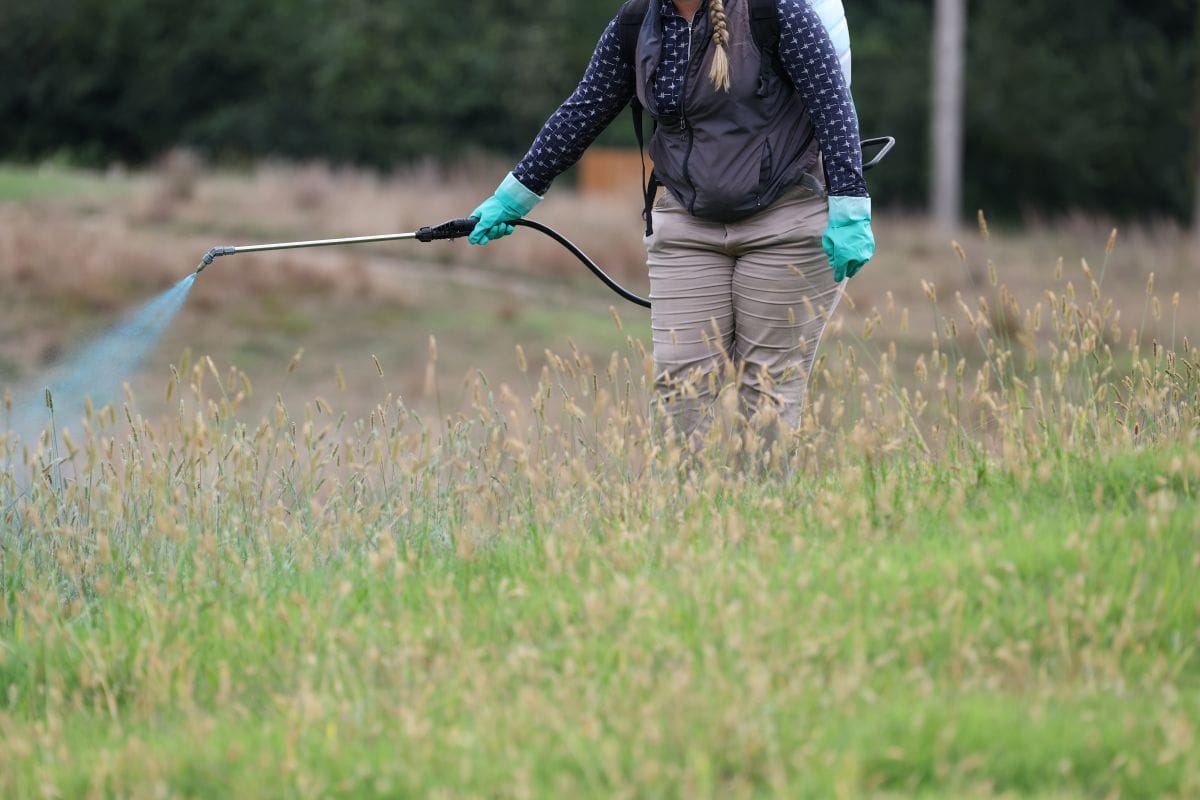
Bayer has moved to consolidate most remaining U.S. Roundup cancer claims through a proposed nationwide settlement valued at up to $7.25 billion, according to settlement papers filed in Missouri state court. The proposal targets lawsuits alleging the company failed to warn that Roundup, a widely used herbicide, could cause non-Hodgkin lymphoma. The agreement would require court approval and includes a long-term funding mechanism designed to cover both current claimants and certain future claimants who allege exposure before the settlement’s filing date. The filing arrives as the U.S. Supreme Court is set to hear arguments on a federal preemption theory that could reshape Roundup litigation strategy regardless of whether the settlement proceeds.
Proposed Settlement Structure and Eligibility
The settlement was filed in St. Louis Circuit Court, a venue with longstanding ties to Roundup litigation and home to Bayer’s North America crop science division. Under the proposal, Bayer would make annual contributions to a dedicated fund for up to 21 years, with total payments capped at $7.25 billion. The agreement is designed to resolve most pending cases and establish a framework to address additional claims brought in coming years by individuals who contend they were exposed to Roundup before the filing date.
Payouts would be tiered based on claimant characteristics, including the manner and duration of Roundup use, age at diagnosis, and the clinical severity of the alleged non-Hodgkin lymphoma—issues that often require input from oncology experts. Settlement documents describe substantially higher average awards for younger claimants with aggressive disease and lengthy occupational exposure, and lower average awards for older residential users with less aggressive diagnoses. The proposal also includes an opt-out feature, and Bayer reserves the right to terminate the settlement if opt-outs exceed an unspecified threshold, introducing uncertainty about the ultimate participation rate and the settlement’s final scope.
Litigation Inventory and Valuation Pressures
The proposed deal is set against a large and unevenly resolved claim inventory. Settlement documents indicate roughly 200,000 Roundup-related claims have been asserted, including more than 125,000 lawsuits filed since 2015. Only a limited number have proceeded to juries, producing mixed results: 13 verdicts for Bayer and 11 for plaintiffs. The plaintiff wins include a $2.1 billion award by a Georgia jury last year, underscoring the potential exposure in outlier cases even if most matters are resolved through negotiated outcomes.
The new proposal would follow prior settlement activity that, according to court filings, accounted for approximately 77,000 claims through two recent agreements. Even with those resolutions, the remaining docket presents significant cost volatility because Roundup cases frequently turn on causation proof, contested scientific evidence, and labeling duties that vary by jurisdiction. Claimant attorneys have offered differing assessments of whether the proposed matrix yields adequate value, with some signaling potential opt-outs on the basis that individual awards may not align with litigation expectations in higher-value profiles.
Federal Preemption Issue and Broader Regulatory Context
The settlement filing coincides with a Supreme Court case in which Bayer argues that failure-to-warn claims should be barred because the U.S. Environmental Protection Agency approved Roundup’s label without a cancer warning. Bayer’s position is that federal pesticide law preempts states from imposing additional warning requirements through state tort duties. The Supreme Court matter arises from an appeal of a Missouri case that resulted in a $1.25 million award to a man who developed non-Hodgkin lymphoma after using Roundup on a community garden in St. Louis.
The pending preemption ruling is distinct from the settlement proposal, but it shapes the risk calculus for both sides. The settlement could provide a compensation pathway for claimants even if Bayer prevails on preemption, while also limiting Bayer’s exposure if the Court rejects preemption and state-law claims remain viable. Operationally, Bayer has already reformulated Roundup sold in the U.S. residential lawn and garden market to exclude glyphosate, while continuing to sell glyphosate-based formulations for agricultural uses—an issue that often draws on toxicology experts. Regulators have stated glyphosate is not likely carcinogenic to humans when used as directed, and the federally approved label includes no cancer warning—facts central to Bayer’s defense and to ongoing legislative efforts in some states to restrict failure-to-warn suits where labeling complies with federal requirements.
Case Details
Court Name: St. Louis Circuit Court
Plaintiff Attorney(s): Seeger Weiss LLP