In this article
Accident reconstruction expert witness testimony is only as strong as the evidence behind it. Courts, juries, and opposing counsel tend to focus less on the label “reconstruction expert” and more on a practical question: what data supports the opinion, and how reliably was that data collected and analyzed?
In most cases, persuasive reconstruction testimony is built from multiple evidence streams that confirm each other. Physical scene evidence, vehicle data, digital records, and disciplined documentation usually matter more than polished simulation graphics alone.
Scene evidence remains the foundation
The most important reconstruction evidence often comes from the crash scene itself. That evidence can disappear quickly, which is why early documentation matters.
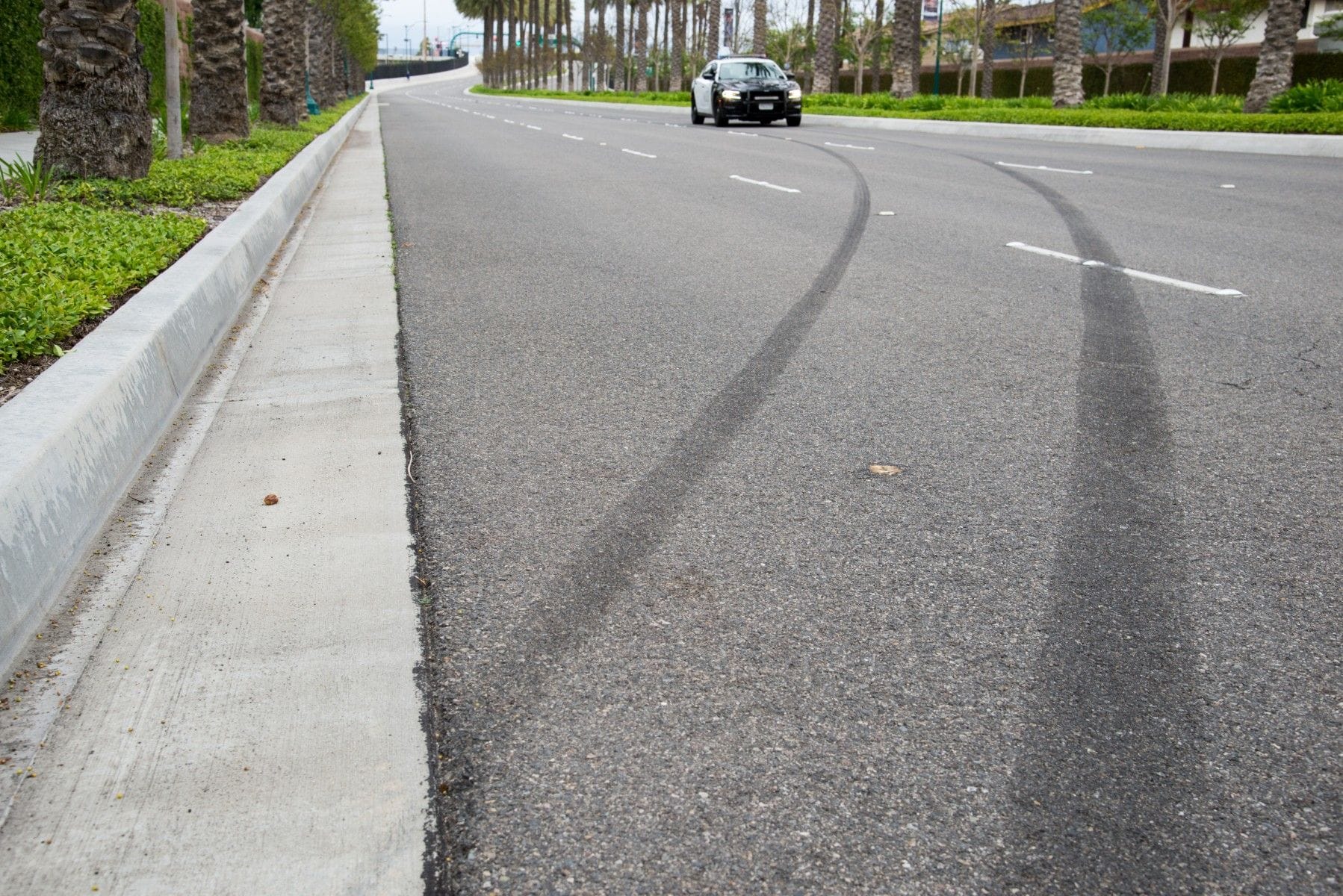
Common scene evidence includes:
- skid marks and brake marks
- yaw marks
- gouge marks and scrapes in the roadway
- debris fields
- fluid trails
- final rest positions
- lane geometry, signage, and traffic control devices
- roadway defects, shoulder conditions, and sight obstructions
This evidence helps an expert address core liability questions: direction of travel, braking, steering input, point of impact, relative speed, and post-impact movement. It can also help test whether a driver’s account is consistent with the physical record.
The key is documentation quality. Measurements, scale-based diagrams, time-stamped photographs, drone imagery, or 3D laser scans generally make the analysis more defensible than broad conclusions based on a limited photo set.
Vehicle evidence often validates or challenges the narrative
Vehicle inspections provide another major layer of support. Crush damage, transfer marks, undercarriage damage, tire condition, steering and brake components, lighting systems, and restraint-system evidence can all be significant.
In many cases, the vehicle itself helps answer questions that witness statements cannot resolve. Damage profiles may clarify angle of impact, overlap, occupant kinematics, or whether a claimed sequence of events is mechanically plausible.
Event Data Recorder information can be particularly useful when available. EDR data may capture pre-crash speed, brake application, throttle position, steering-related inputs, seatbelt status, and delta-v, depending on the vehicle and system. When properly downloaded and interpreted, that data can materially strengthen a reconstruction opinion.
But EDR evidence is not self-proving. Attorneys should expect scrutiny on download protocols, module integrity, whether the recorded event corresponds to the subject crash, and the limits of what the system actually measured. A strong expert does not overstate EDR precision or treat the download as a complete reconstruction by itself.
Digital and third-party records can be decisive
Modern reconstruction work increasingly depends on sources beyond the roadway and vehicles.
Useful third-party and digital evidence may include:
- dashcam footage
- surveillance video
- bodycam footage
- commercial telematics
- GPS and fleet records
- 911 audio and CAD logs
- traffic signal timing and phasing records
- weather and visibility records
- cell phone records or extraction data
- dispatch and work-zone documentation
These sources can narrow timing disputes, confirm vehicle movements, establish signal phases, or address distraction and perception-reaction issues. Video evidence is especially powerful when it can be synchronized with scene measurements and other data.
Still, digital evidence raises authentication and preservation issues. Missing metadata, overwritten video, unclear camera timing, and incomplete telematics exports are common problems. Reconstruction opinions based on digital evidence are generally stronger when the expert can explain chain of custody, source reliability, and how the data was aligned with the physical evidence.
Human factors evidence can support, but should not substitute
Human factors analysis often becomes relevant when the dispute turns on visibility, conspicuity, reaction time, attention, or driver decision-making. In the right case, this can help explain whether a hazard was detectable and whether avoidance was reasonably possible.
Reliable human factors analysis usually depends on objective inputs: roadway geometry, lighting conditions, line-of-sight measurements, vehicle lighting, weather, and timing evidence. It is most persuasive when tied closely to measurable conditions rather than generalized assumptions about what a driver “must have seen.”
That distinction matters in admissibility challenges. Courts are more receptive to human factors opinions grounded in documented scene conditions and accepted methodology than to testimony that drifts into speculation about state of mind.
Methodology matters as much as the evidence itself
Strong evidence can still produce weak testimony if the expert’s method is not transparent. Reconstruction opinions are more defensible when the expert can show:
- what data was used
- how measurements were obtained
- what formulas or principles were applied
- whether alternative explanations were considered
- what assumptions were necessary
- the limits and potential error sources in the analysis
This is particularly important when simulation software is used. Animations and modeling can be helpful demonstratives, but they usually carry weight only if the underlying inputs were independently supported and the results were validated against physical evidence. Software should illustrate an analysis, not replace one.
Preservation and chain of custody are often outcome-determinative
Some of the best reconstruction evidence is lost in the first few days after a crash. Vehicles are repaired or salvaged, EDR modules are disturbed, surveillance footage is overwritten, and roadway evidence fades or is removed.
Early preservation steps often include:
- sending preservation letters immediately
- arranging vehicle inspections before repair or disposal
- securing EDR downloads through proper protocols
- identifying nearby cameras and obtaining footage quickly
- preserving phone, telematics, and fleet data
- documenting the scene before conditions change
From a litigation standpoint, preservation failures do more than reduce analytical certainty. They can also create spoliation disputes and weaken the foundation for expert opinions.
What makes testimony more defensible under Daubert or Frye
When reconstruction testimony is challenged, the attack usually centers on reliability, not just conclusions. The strongest opinions are typically based on sufficient facts, accepted methods, documented measurements, and a clear connection between the evidence and the ultimate opinion.
Common vulnerabilities include:
- incomplete scene data
- unsupported assumptions
- overreliance on witness accounts
- unvalidated software outputs
- failure to inspect the vehicles
- weak chain of custody for digital evidence
- opinions that exceed the available data
A well-supported reconstruction expert should be able to explain not only what the evidence suggests, but also what it cannot establish with confidence.
Practical takeaway
The evidence that most strengthens accident reconstruction testimony is evidence that is objective, preserved early, and tested through a transparent method. Scene marks, debris patterns, vehicle damage, EDR data, video, telematics, and third-party records are most persuasive when they work together rather than stand alone.
For attorneys, the practical lesson is straightforward: secure the evidence early, document it carefully, and retain experts who can tie each data source to a reliable methodology. That is what makes reconstruction testimony more credible, more admissible, and more useful in litigation. For more on accident reconstruction, the use of video evidence, and surviving a Daubert or Frye challenge, these issues often determine whether a reconstruction opinion will hold up under scrutiny.