A Texas state-court jury has returned a $104 million verdict in a wrongful death case arising from a pre-dawn collision on Interstate 40 in Sequoyah County, Oklahoma. The suit, tried in El Paso County district court, was brought by the family of Orlando Robles, an El Paso man who died after a commercial driver allegedly fell asleep and struck a stopped box truck. Public statements by plaintiffs’ counsel describe a damages allocation that includes both compensatory and punitive awards to multiple family members, reflecting the jury’s assessment of liability and deterrence. The matter highlights continuing litigation exposure for motor carriers when fatigue management and roadway safety obligations are alleged to have failed.
Crash Allegations and Parties’ Theories
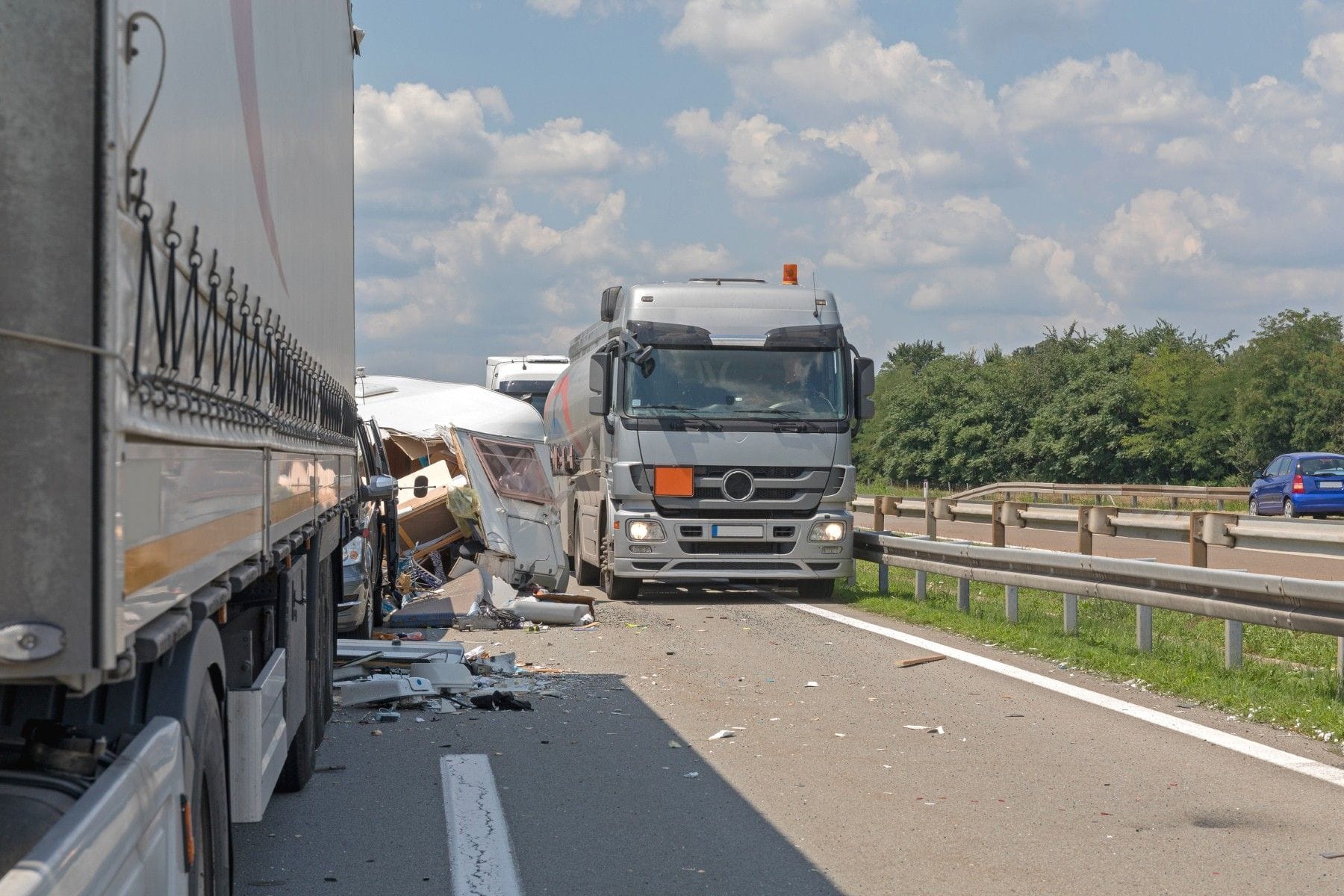
According to the complaint, the collision occurred around 4 a.m. on Oct. 28, 2020, as a commercial tractor-trailer operated by MVT Services LLC driver and trainer Juan Garcia traveled westbound on I-40 near Roland, Oklahoma. The suit alleges Garcia fell asleep, drifted off the roadway, and collided with a box truck that had stopped with emergency lights flashing. Plaintiffs contend the box truck was positioned partially on the shoulder and partially in the outside lane, and that Garcia’s fatigue and inattention were the precipitating factors that converted a roadside hazard into a fatal impact.
The family further alleged that Robles, who was a passenger in the tractor-trailer, was asleep at the time of the crash and was killed when the sleeper compartment was destroyed. The defendants’ specific defenses were not detailed in publicly available statements, and defense counsel did not provide a public response at the time of the verdict announcement. Even so, the posture of the case reflects the core negligence themes common in commercial trucking litigation, including the adequacy of fatigue-related oversight and the foreseeability of catastrophic harm when a professional driver operates while allegedly impaired by sleep deprivation—an issue that often turns on human factors considerations and related testimony.
Trial Evidence and Damages Presentation
Trial began June 30 in the 448th Judicial District Court of El Paso County, Texas, with claims asserted by Robles’ wife, mother, and daughters; the mother of Robles’ son later intervened, according to counsel’s statements. Plaintiffs’ presentation emphasized the family’s loss and the circumstances of Robles’ death shortly before Halloween. Paulina Merino, the mother of Robles’ son, described the relationship between Robles and his child, underscoring the loss of parental guidance and presence across milestones and holidays.
The damages framework described after trial indicates the jury considered both compensatory and punitive components. In general, compensatory damages in a wrongful death case are intended to address economic and noneconomic harms attributable to the death, while punitive damages are designed to punish and deter conduct a jury finds sufficiently culpable under the governing standard. Plaintiffs’ counsel stated that the verdict “recognizes this tragedy should never have happened,” and emphasized an asserted safety obligation to keep fatigued drivers off the road—an argument sometimes supported by strategies for using a human factors expert witness. The trial record and verdict form were not described as publicly available immediately following the announcement, which can limit precision regarding the jury’s findings and apportionment logic.
Verdict Allocation and Post-Verdict Posture
According to plaintiffs’ counsel, the jury awarded a total of $104 million. Counsel stated Robles’ son received $20 million in compensatory damages and $7.5 million in punitive damages, while Robles’ wife, mother, and five other children received $54 million in compensatory damages and $22.5 million in punitive damages. Although the verdict form was not reported as available at the time of the announcement, the stated distribution suggests the jury separated categories of damages and assessed punitive awards across distinct claimant groupings.
The plaintiffs’ family members were represented by Glasheen Valles & Inderman LLP, according to court filings and counsel statements, with additional representation noted for other family members and for Robles’ son. Defendants were represented by separate counsel as identified in the case caption and post-verdict reporting. Next steps typically include entry of a final judgment, potential post-trial motions challenging the legal sufficiency of evidence or the measure of damages, and appellate review, particularly when punitive damages are involved and may be subject to statutory or constitutional scrutiny.
Implications for Fatigue, Safety Compliance, and Carrier Risk
The verdict underscores how juries may evaluate fatigue allegations in the commercial driving context, where the professional standard of care is often framed around training, monitoring, and compliance with safety rules. In cases involving alleged sleep-related impairment, plaintiffs commonly focus on whether the carrier’s practices adequately prevented foreseeable harm, including policies governing rest, scheduling, and supervision when a driver is acting as a trainer. The reported inclusion of punitive damages indicates the jury found the plaintiffs’ theory supported a deterrence rationale, at least as presented at trial.
For motor carriers and insurers, the case illustrates the potential for high exposure where the fact pattern includes a stopped vehicle, emergency lights, and an alleged failure to maintain alertness and lane control. While the defendants’ counter-narrative was not publicly detailed in the immediate post-verdict reporting, the litigation trajectory suggests that crash mechanics, causation, and the reasonableness of safety practices were central issues—topics that frequently rely on accident reconstruction and the handling of evidence such as collision data recorders. The case is captioned Erika Robles et al. v. MVT Services et al., No. 2022DCV3059, in the 448th Judicial District Court of El Paso County, Texas.