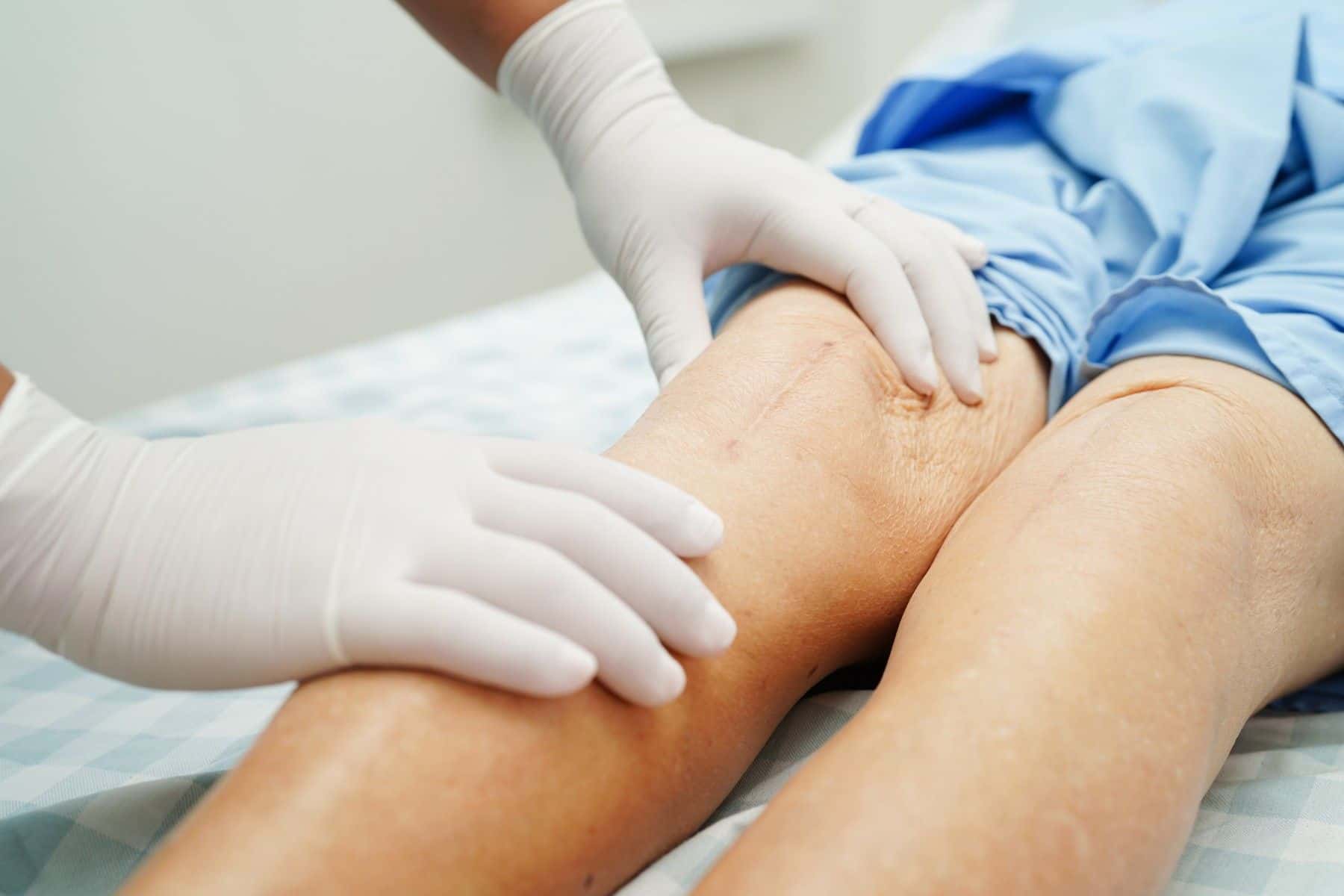
This case involves an older adult patient with diabetes mellitus who underwent a left total knee replacement, followed several years later by a revision left total knee replacement due to a chronic left knee infection. Shortly after the revision, the patient required an additional surgical repair involving the left femoral component of the knee prosthesis.
The patient later experienced recurrent infections in the left knee. The patient was diagnosed with MRSA cellulitis of the left knee, and additional cultures grew Enterobacter cloacae. The patient was treated with antibiotics and discharged to subacute rehabilitation. After continued signs of infection, fluid from the left knee again tested positive for MRSA, and the patient underwent irrigation and debridement with a left total femur replacement. Infectious Disease recommended an extended course of antibiotics and wound vacuum-assisted closure therapy.
A further washout and debridement was recommended shortly thereafter, but the procedure did not go forward due to reported issues obtaining consent. The patient was later discharged but continued to require treatment for chronic knee infection, including antibiotics and additional surgical procedures. Plastic surgery involvement was also recommended to address the ongoing wound and infection issues. Despite these measures, the infection and related complications progressed, ultimately requiring a left above-the-knee amputation.
From a legal perspective, an infected joint replacement case often turns on whether the infection was recognized, treated, and escalated appropriately. Although infection is a known risk, the key issue may be whether delays in surgery, wound care, specialist involvement, consent communication, or discharge planning contributed to the progression to amputation.
Questions to the Orthopedic Surgery expert and their responses
What are the most pertinent standards for the prevention of postoperative infection for a patient with a total knee replacement?
Patient selection, sterile operating environment, proper post op care. Infections are not considered 100% preventable.
What are the standards for the orthopedic surgeon's management of postoperative knee infections to prevent the need for limb amputation?
Not all amputations are preventable depending on the situation although amputation is rare. Infection must be treated aggressively and timely.
About the expert
This expert has over 15 years of experience in the field of orthopedic surgery. This expert earned his BS in cell and molecular biology from Tulane University and an MD from the Louisiana State University School of Medicine. He went on to complete a residency in orthopaedic surgery at Fort Worth Affiliated Hospitals. Today, this expert is dual board certified in orthopedic surgery and sports medicine. Previously, he served as a team physician at Archbishop Rummel High School and as a physician for the Audubon Orthopedics and Sports Medicine clinic. Currently, this expert practices as an attending physician at 4 hospitals and a managing partner of an orthopedic private practice all based in Lousiana.

E-479560
Specialties:
Questions to the Orthopedic Surgery expert and their responses
How does the timeliness of diagnosis of and intervention for postoperative infections following knee replacement typically affect prognosis?
Earlier is of course better, and if early enough sometimes the infection can be treated without removing the prosthesis.
About the expert
This expert has over 30 years of experience in the field of infectious diseases. He obtained his BA from the University of California, San Diego, and his PhD from the University of North Carolina at Chapel Hill, before receiving his MD from Columbia University. He then completed a prestigious internship and residency in internal medicine and a fellowship in infectious diseases at Stanford University. Today, this expert is double board-certified in internal medicine and infectious diseases. He is a member of several professional organizations, including the American Society for Microbiology, the Infectious Disease Society of America, and the American Association for the Advancement of Science. He is also very active in academia, having published over 75 peer-reviewed journal articles and 5 textbook chapters on topics related to infectious diseases. This expert previously served as an assistant professor, associate professor, and professor of infectious diseases at the University of California, Davis. Currently, he serves as a professor emeritus of infectious diseases at a major medical school.
E-009638
Specialties:
Questions to the Orthopedic Surgery expert and their responses
In general, what aspects of a patient's care (treatments, consults, etc) are important in a patient with chronic knee infections after a total knee arthroplasty to prevent long-term complications?
In a patient with chronic knee infections after total knee replacement, it is important to have a thorough debridement of all infected tissue and typically this requires removal of the prothesis, appropriate antibiotic space and 6-8 weeks of IV antibiotics and reimplantation only once certain that infection has been eradicated.
About the expert
This board-certified orthopedic surgeon has over a decade of clinical experience specializing in total joint replacement. He earned a BA in molecular biology from Princeton University and his MBA in business administration from Columbia University. He earned his MD from Columbia University and went on to complete a general surgery internship and orthopedic surgery residency at New York-Presbyterian Hospital and the Hospital for Special Surgery in New York City. He is active in his field as a member of the American Academy of Orthopedic Surgeons. He currently holds positions as an attending orthopedic surgeon at two hospitals and an ambulatory center in New York. Additionally, he is the chairman of orthopedic surgery and an attending orthopedic surgeon with a medical group in New York and Connecticut.
E-604689
Specialties: